All in a Day's Walk
A month-long slow food walking performanceArchive for Walk
Visions of sugar plums… (or organic medjool dates)
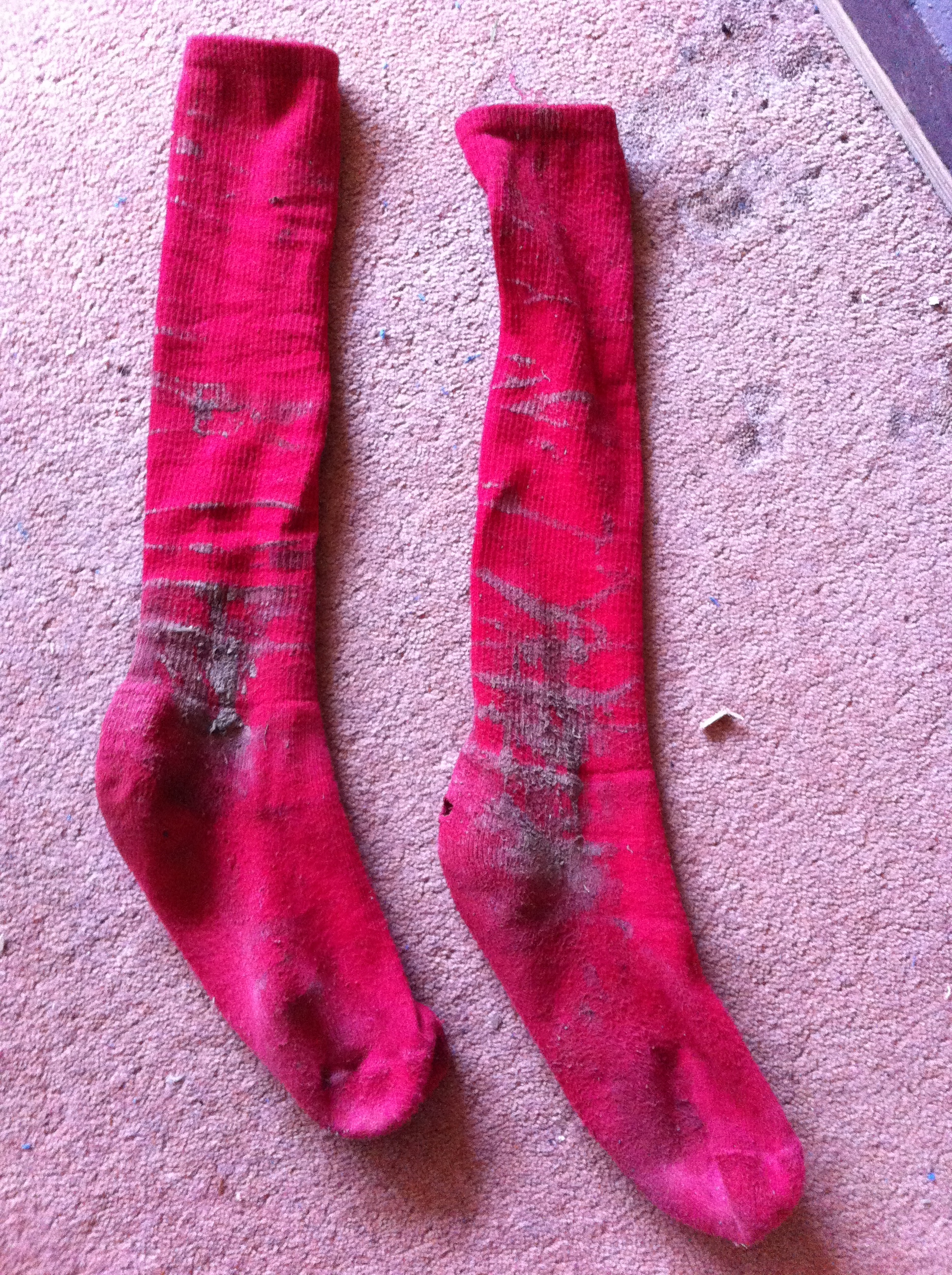
Christmas Eve and a new meaning to hanging up stockings by the fire…
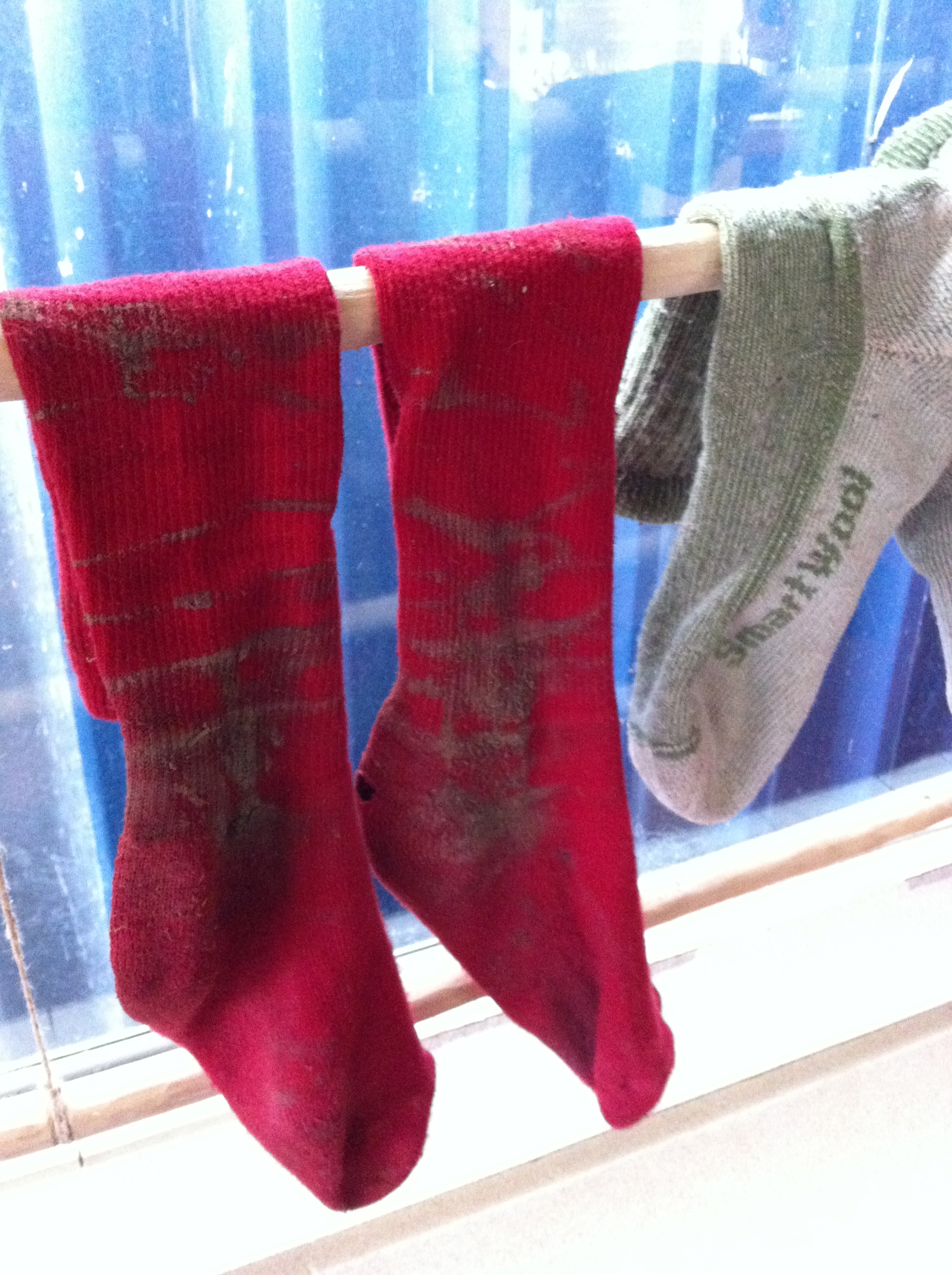
So, time for some reflection, before the Twelve Days of Christmas Countdown begins…
I’m enjoying this. (Now). I took such a calorific nosedive at the start of the project that my brain stopped working and I went into some kind of survival mode (the freezing weather didn’t help). As someone who knows how to cook (and on wood!), and eat well using mostly vegetables, I’m baffled by the sudden-onset cluelessness as to how to walk and feed myself properly on local food in December, simply because I was adapting to a diet that was slightly less varied, unable to rely on the the convenience products – soya milk, rice cakes, peanut butter, cashews, dates, bananas – on which I realise I’d come to depend for instant energy (and protein). I also realise how much unseasonal, unlocal produce has crept into my ‘staples’ list in recent years – avocados, spinach, red peppers, romaine lettuce, cucumber. And most of all, I realise that my relationship to food had become all about speed. Allowing myself to get very hungry, feeding myself as quickly as possible, hurtling off to the next thing. Fast (wholesome) food for fast living. I had to s l o w down, but the transition was painful…
I’ve learnt how to live s l o w l y. The hunger and loss of strength has died away now replaced with a twinge of embarrassment that I was initially so pathetic. There is plenty of food I can eat, it was just learning how to cook and carry it. It’s also interesting how much less I’m eating than normal – the food is less palatable, so I’m less bothered about it. How much of hunger is actually just a relationship with taste – and wanting to taste – rather than what we truly need to consume? Now I’ve learned how to feed myself, how to maintain a leaven, how to cook properly on wood, and most of all, how to slow down. Slow (wood/cooked) food takes time and planning and I can’t let myself run out…(no speed pun intended)
I feel very well. Unpolluted by refined food, sugars, salt (none of which I eat much of normally anyway but still…), I feel very clear-headed and clear-bodied and in a better place to ‘listen’: to myself (my body) and other people.
I haven’t walked as much or as far as I’d like, because initially I couldn’t feed myself enough to sustain the long distance endurance-tramps I’d intended. It’s also very very very wet which slows me down and takes up far more energy. But most of all the process of surviving takes more time: the business of living, bread-making, cooking, wood-fetching, water-heating and horse-feeding. Now I’ve got a comfortable routine, I’m hoping that the weeks that follow will allow me to address this. But my desire to push myself – and the sense of ‘cheating’ if I don’t (otherwise it’s not a performance, right?) also makes me laugh at myself – so determined to make my walking practice h a r d because I’m so sold on the specific notions of achievement and endurance I seem to admire in the work of the solitary male walking artists, when really, I’m a female walking artist after all: it’s all about conviviality and connection and ‘knit[ting] together people and place’ (Heddon and Turner 2010). And you don’t have to walk hard and fast and competitively and show-offingly to the edges of your personal food horizon to do that.
I haven’t talked as much as I’d like. Apart from the encounters I’m orchestrating (with people who are already proponents or producers of local food), I’m just not really meeting that many other people – it’s hard to bump into people in the pouring rain on obscure and muddy Herefordshire footpaths in December. But I also have to admit I have been deliberately missing opportunities, especially when I’ve been hungry – it’s too vulnerable-making to initiate a conversation with a stranger when hungry: I’ve felt too distracted by this more pressing need. So I feel like I’m failing in this regard from an activist perspective, because then it’s just all about me. But it’s not over til the fat lady sings… or the skinny girl finishes walking.
But I’ve met some amazing people. I feel filled with love for the local food producers, makers and movers of South Herefordshire and the web that connects them – partly constructed, now, of my footprints. There is a real awareness bubbling away in the countryside here, like a healthy leaven.
I’m mostly missing oats but also bananas, mango, soya milk, rice cakes, peanut butter and tulsi tea. But the VERY first thing I am going to eat at the end of this performance is a single, delicious, fresh, organic medjool date. And be grateful for every single mile it travelled to get to me.
Reference
Heddon, D. and C. Turner (2010) ‘Walking Women: Interviews with Women on the Move’ Performance Research 15 (4) 14-22
Once Upon a Tree
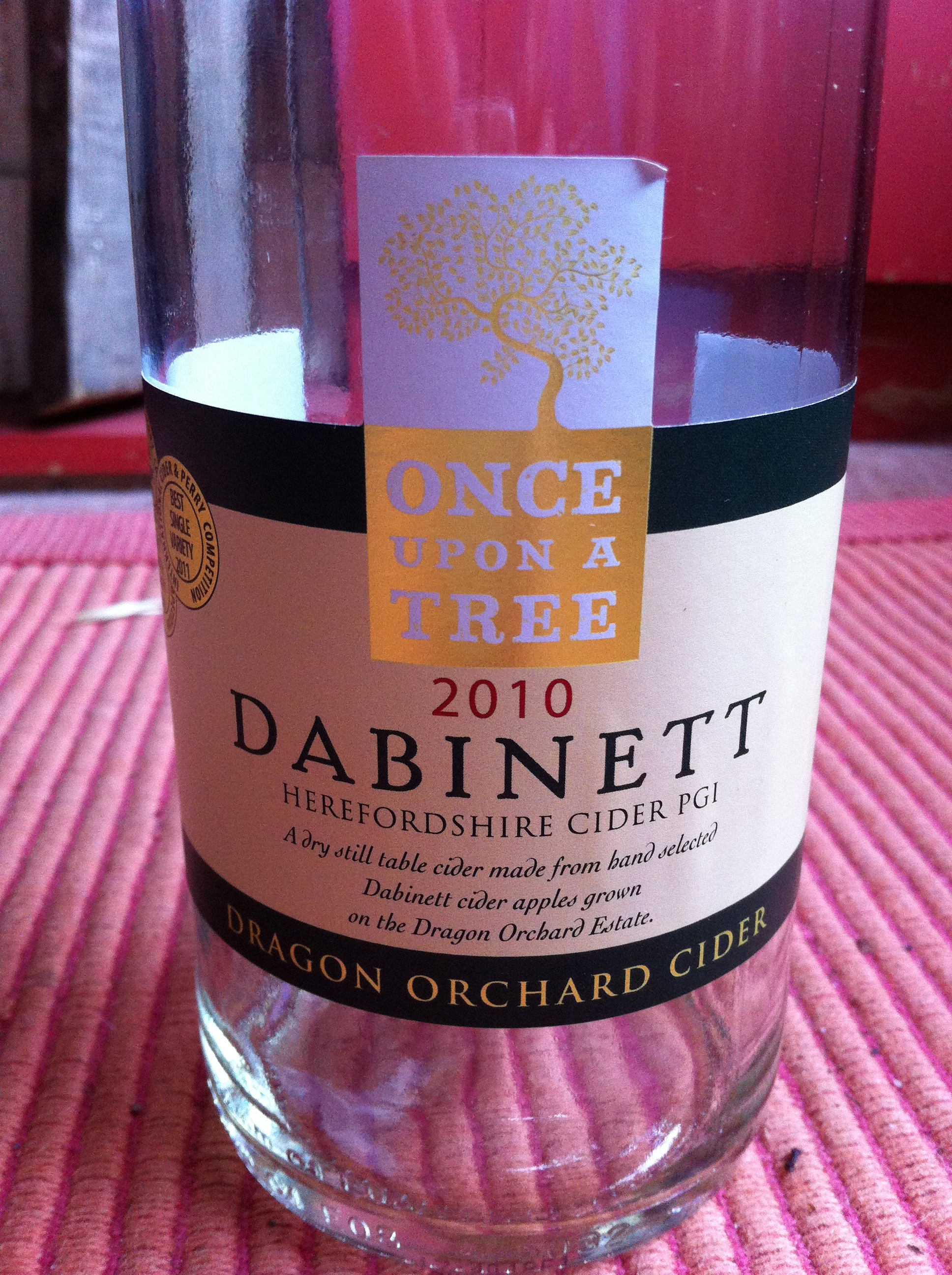
Last night, on the winter solstice I walked in the gloaming, and then the moonlight, across the Marcle Ridge to Putley to sing carols around the tree at Dragon House. The Stanier family have been the mainstay of my social life during this project, their hospitality and generosity with their own amazing (and award-winning!) Once Upon a Tree cider and apple juice sustaining me calorifically as well as conversationally. Passionate about local food, rural community, sustainable living and re-connecting consumers with producers, the Staniers have run Dragon Orchard Cropsharers since 2001, one of the longest-running Community Supported Agriculture schemes (CSAs) in the UK. Cropsharers are invited to attend one open weekend each season, getting to spend time in the orchard as it changes through the year and receiving a proportion of its gifts each season: eating and cooking apples, juices, ciders, jams and chutneys. There is a shop at the orchard itself, and their Three Counties Cider shop in Ledbury which sells a range of local cider and other produce from Herefordshire, Worcestershire and Gloucestershire.
Dragon House is a beautiful place to be and always somewhere I associate with conviviality, hospitality and warmth. Tonight is no exception – as I emerge from the dark, many people are gathering here to sing also, and there is the unmistakeable smell of mulled cider to greet our arrival. Norman Stanier gives me and the project a special introduction to the assembled crowd before we sing carols round the very tall two-storey tree…
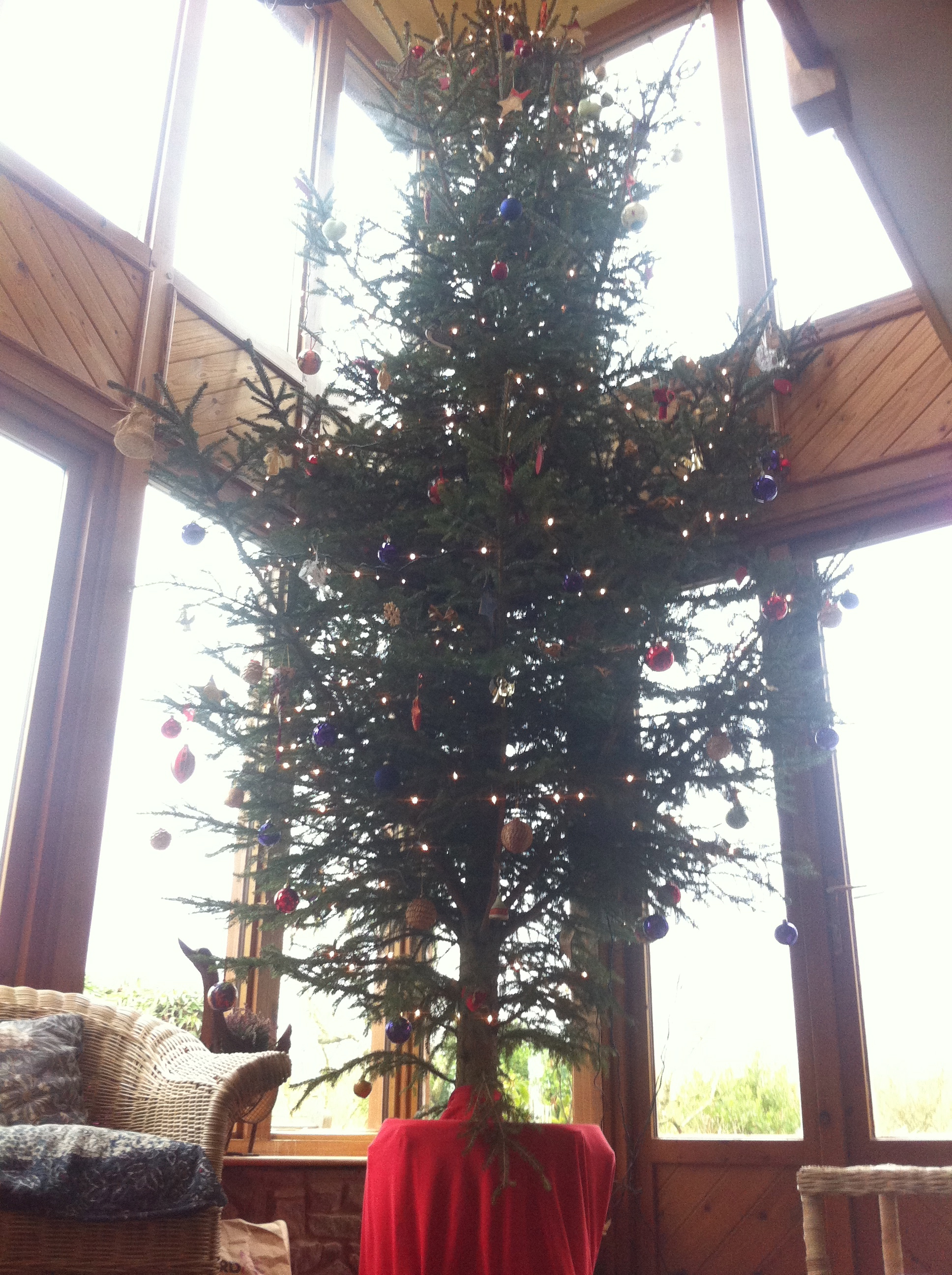
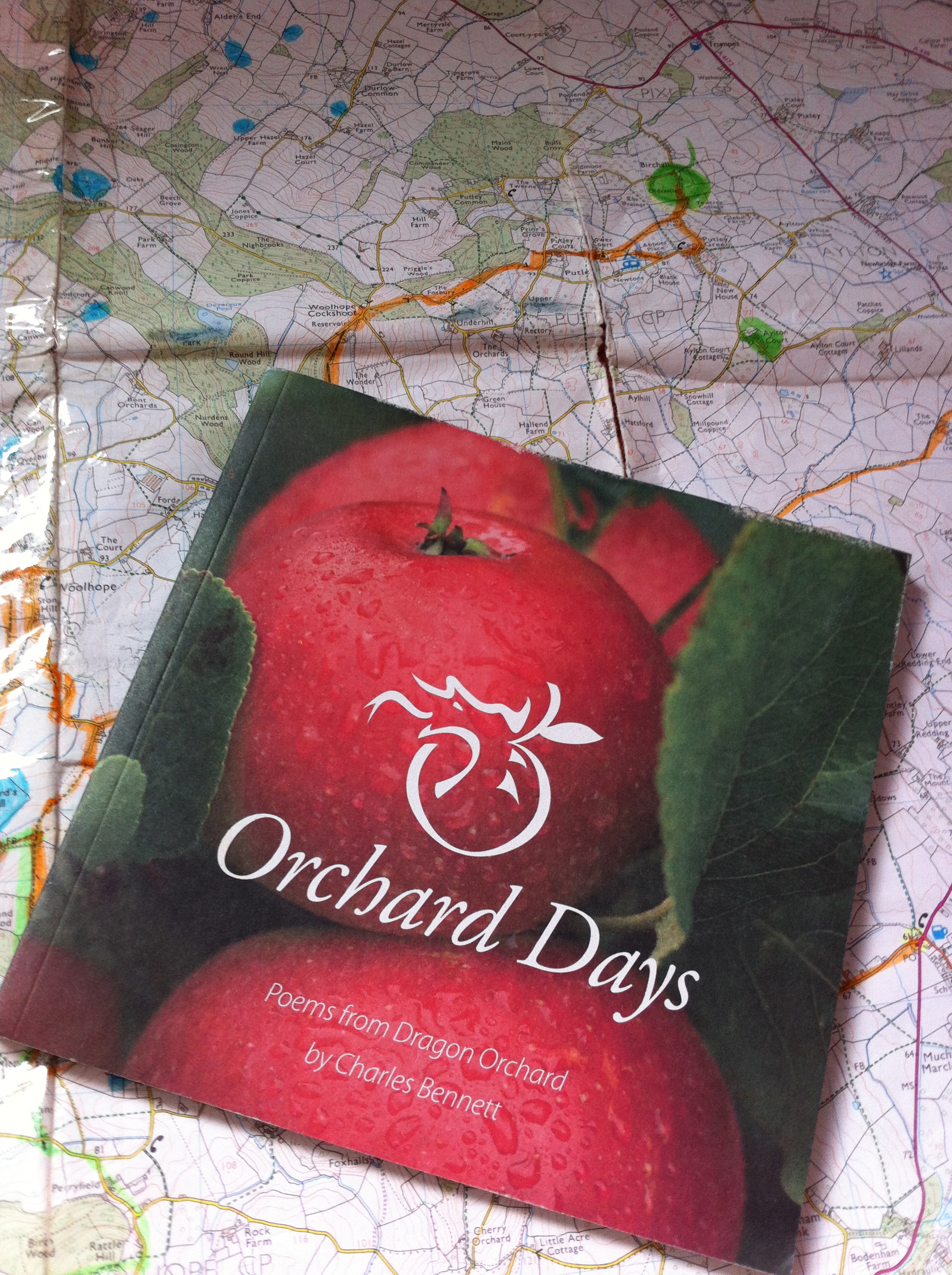
and people share readings – poems, a scene from Pickwick papers – which Norman concludes with the December poem from their own 2009 book Orchard Days (poems by Charles Bennett inspired by a visit to the orchard one day each month for a year). It concludes with a beautiful image of Adam holding the ‘Christmas Apple’ out to Eve ‘who hangs it back on the tree,/and all of us grow more innocent/year on year’
I also meet Fran from the Ledbury Food Group who tells me about the CPRE local food web mapping project. I realise this is what I’m doing – less usefully? – through this performance. We swap contacts to talk more…
—
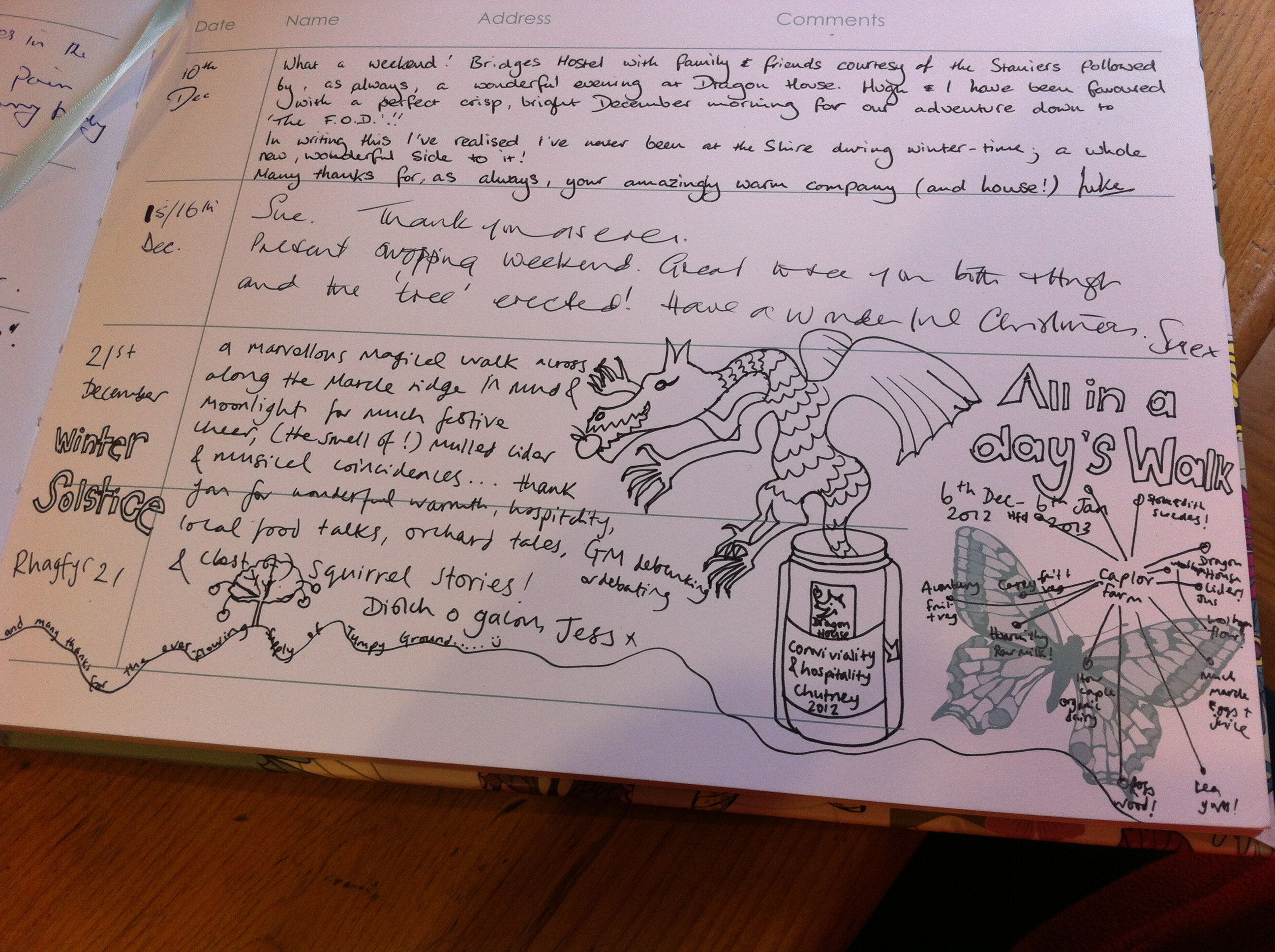
Today, after a wonderful breakfast of fresh (cold-stored) apples (heaven after only apple juice), conversation, chutney-jar labelling and deliberating over the visitors’ book (every single overnight guest that has ever stayed must make an entry…)
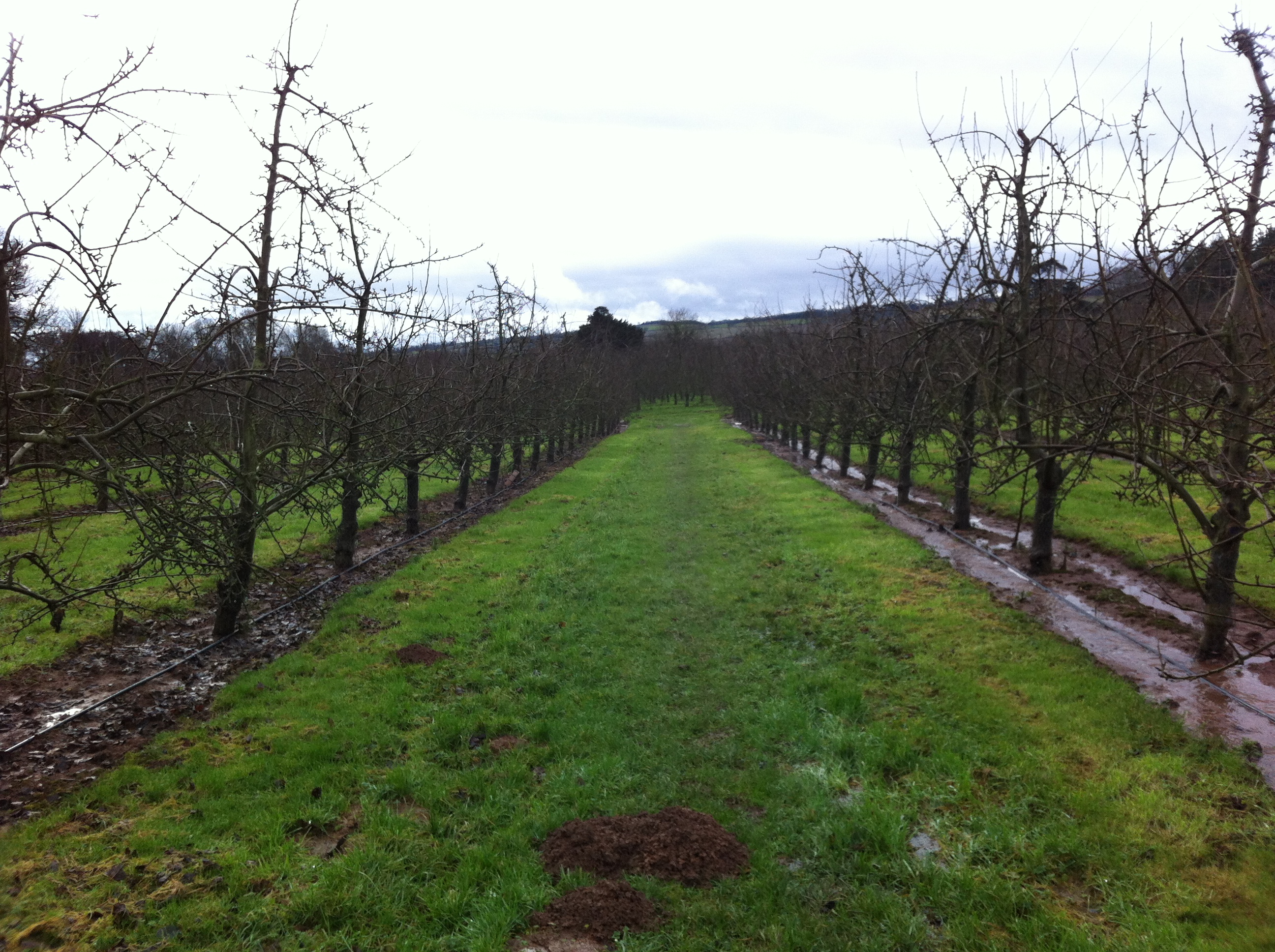
I walk home through the surrounding orchards of Putley (where the pics are from), streams of water running between the trees. I’m excited because I’ve been invited to attend the Cropsharers wassail in January to talk about this project and my experiences or conclusions, whatever they may be. Walking in daylight this time, I retrace my steps made in moonlight thinking of the Wassail pig from the January poem who ‘turns her attention/ to that big white apple in the sky/she’s looked at night after night.’
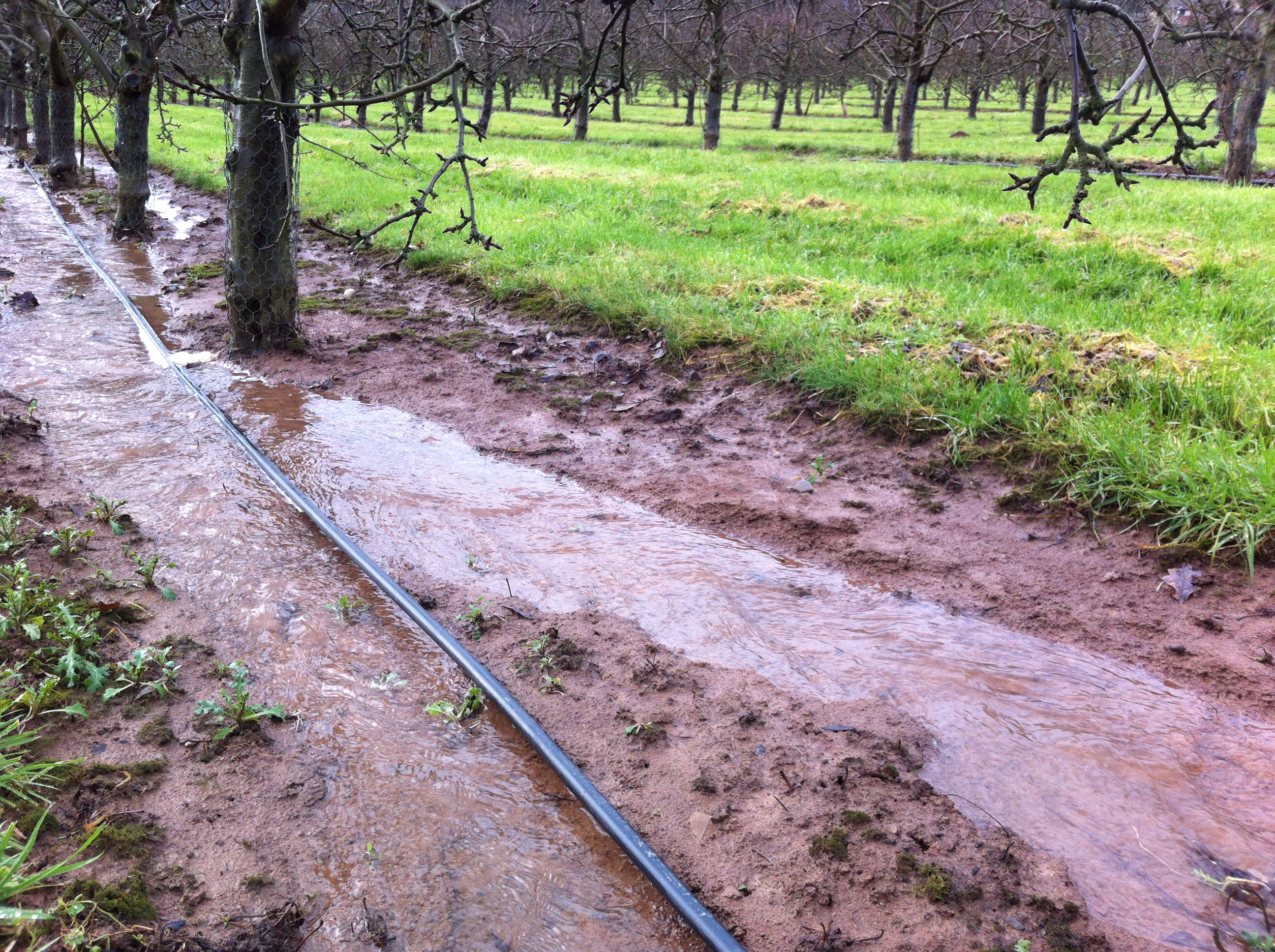
Winter solstice

It’s the winter solstice which is the event I now choose to celebrate – with food, conviviality, warmth, gifts – as my mid-winter festival of choice. (Not that I’m completely bah humbug about the big C – I’m even walking to Putley for carol singing tonight.) All in a Day’s Walk has thrown this into an even sharper focus this year – the presence of daylight (or not) has been very much present for me in my daily life in walking and even eating. Eggs – my precious only source of local protein – have been harder to come by, because the shorter days are also the reason why the hens on the farm are laying less. (A connection I hadn’t considered before.)
I’m not a very conscientious celebrant, but it feels important to mark this turning point – the ‘standing still of the sun’ – as I’m walking underneath it.
‘The great cosmic wheel of the year… the symbolic wheel of time is acknowledged here. Jul or Yule means wheel in Norwegian. Northern Europeans of our Celtic past believed this mystic wheel stopped briefly at this crucial point as one cycle ended and a new cycle of the sun began. It was taboo to rotate any wheels at the Winter Solstice, from cartwheels to butterchurns, as they waited for the return of the sun.
Evergreens are brought into the home at this time to represent everlasting life…Each of the evergreens has a deeper symbolism. Red holly berries represent the red female blood of life while the white mistletoe berries represent the the white semen drops of the life-giving male
There is an old tradition of making wheels of evergreens as we celebrate the wheel of the year turning once again towards the sun… ‘
Glennie Kindred (2001) Sacred Celebrations Glastonbury: Gothic Image
Over the past few days, my walking has allowed me to collect various evergreens and I make a solstice wheel from plaited ivy (Fownhope church wall, to be mildly subversive), holly (How Caple and Capler Camp – the iron-age hill fort above the farm), yew (Capler Camp) and mistletoe (Oldstone Farm orchard). I also make my first truly successful rye-spelt sourdough bread – coincidentally shaped into a wheel/ring so that it can cook more easily in my stove-top oven improvised from a cast iron casserole dish.


SLOW flooding

It’s the eve of the winter solstice which this year will be at 11:12 tomorrow. Ignoring the Mayan/world’s end predictions, I walk into the village to post some Christmas presents, through fields wetter than I’ve ever seen them, latticed by runnels and new rivers. Maybe this is the end of the world after all and this project is remarkably prescient but for a lost consonant: not so much slow food as slow flood.
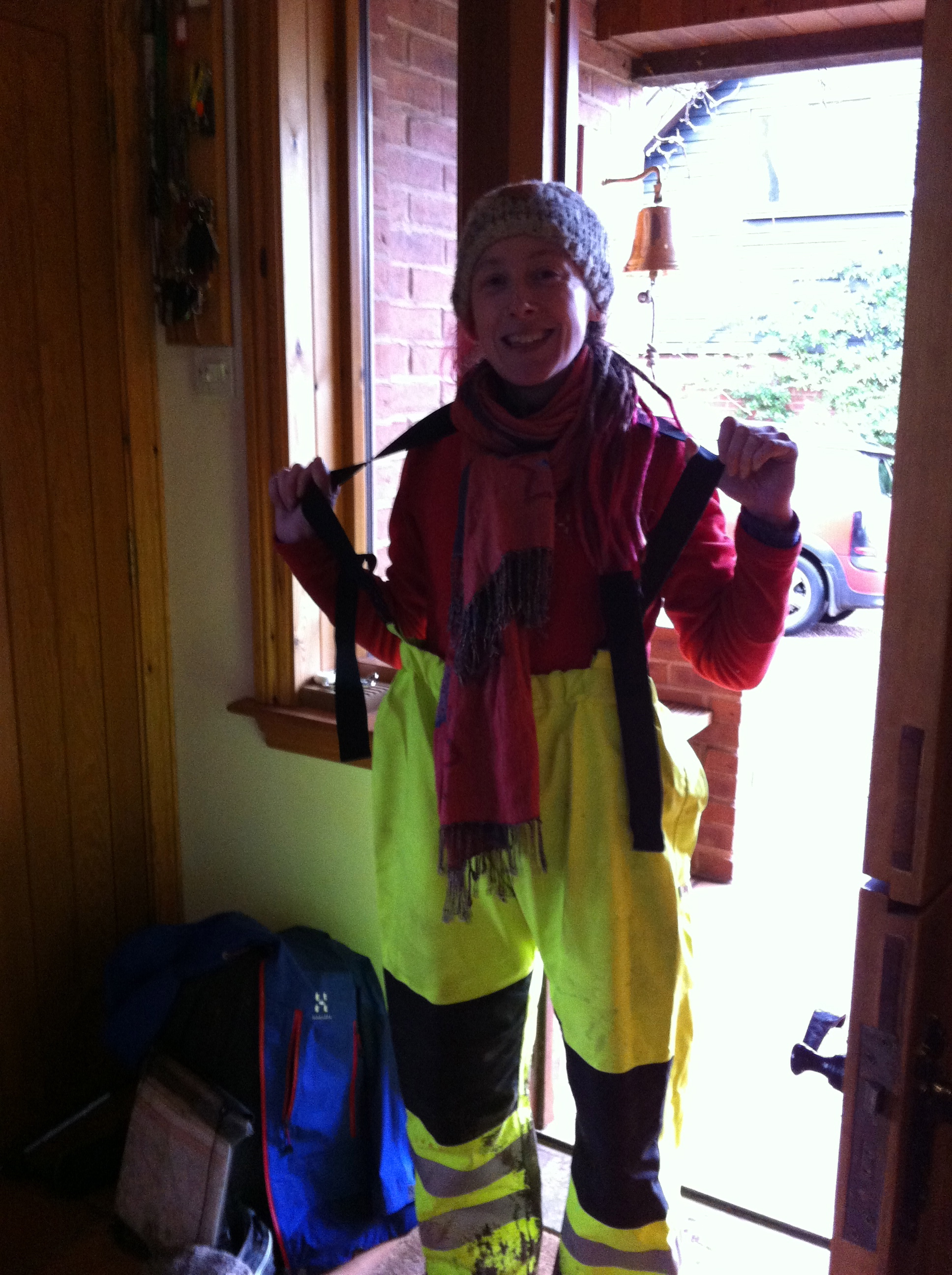
Foolishly I decide to wear my wellies again which might keep my feet dry but have no grip. I fall twice before I’ve even reached the village and have almost made it to the shop when I slip coming off the slope into the rec ground and slide on my back, laughing, down the bank thick with wettest mud. I walk through the village like a swamp beast, much to the amusement of the Post Office queue where I stand, dripping mud onto the counter, making it worse in my pathetic attempts to clean it up, which only succeed in smearing it further.

The postmistress sympathetically wipes my parcel “It will cost more if you weigh it muddy…”. Then weighted down with mud and apple juice and cider I walk home like a cross child with my unbearably caked-in-mud arms held out stiffly to the sides gritting my teeth. I tell a friend about the fall-Post Office palaver and ask “Should I be doing a PhD in clowning?”. “Or drowning?” he responds.


Pasture and pasteurisation

Warming my freezing feet on the still-warm-from-night-before wood burner before I set on a walk to How Caple where I’ve arranged to meet Debbie and Will Edwards, organic dairy farmers just above one of the sweeping bends of the River Wye. I’m excited to talk to them, because I’ve had some informal conversations with Will in the past and always been hugely inspired by his take on farming organically ‘in nature’s image’ and his passion for unadulterated milk, local food and pasture-raised animals. Unfortunately, this means that that cows are, quite rightly, dried off for the winter. So I won’t be able to try any of their milk raw (I was hoping to work out if I still had an allergic reaction to it, or if raw milk – with all its enzymes in tact – would actually agree with me. And I was also hoping to make some raw butter for a solstice treat. But hey ho…)
I walk down under Brockhampton Court, and through Totnor Mill (below, which seems to have been moated by its own leat, hence the little bridge), where a small alpaca herd eyes me warily. Then along the bridlepath to How Caple, which brings me out past another mill (I’m still pretty fascinated by these)


Will and Debbie are kind enough to give me over two hours of their time in the middle of the day, when I know that they would normally be busy with the stock. And the conversation is intense and wide-ranging – from milk (and the evils of pasteurisation and homogenisation) to pasture, to organic systems, to climate change, to Offa’s Dyke, Archenfield and cultural heritage. And it even concluded with a conversation in Welsh (supposedly my native tongue, but Will – who has learnt – was far more fluent than me.) There is lots of food for thought here – on local food systems, and the dysfunctional infrastructure and paperwork of so-called traceability that makes it so hard – too hard – for Debbie and Will to sell their milk themselves locally where it would be ultimately and eminently traceable.
Edited highlights of our mammoth conversation will appear here soon! To be continued…
Solar and salad


Today I’ve arranged to talk to Chris from Caplor Energy – the renewables ‘wing’ of the farm business here where I live. They specialise in solar photovoltaics and solar hot water systems. As a renewables geek, I’m inordinately proud of living here, where pretty much every large south-facing roof is covered in panels and the water in our shower block and livery yard is solar-heated (even Merlin is a fan). And we have a 15kW Proven wind turbine. In terms of energy for this project, all my space-heating, water-heating, and cooking is being supplied by my wood burner, fuelled with local wood. But I’ve also ‘allowed’ myself electricity – for light and computer only – on the basis of all this local renewable generation, the largest array on the barn just above my head as I type. It’s not a closed-loop off-grid system at Caplor, but I’m curious to ask, if it were, how much energy of the farm business and community’s energy needs would be met by the renewable installations. Chris gives me a tour and answers my questions and I’m particularly interested to learn that it’s winter food storage (potatoes) that takes a considerable amount of the farm’s winter energy use. The edited highlights of our conversation are here (with the interesting noises-off of two of the farm blacksmiths working in their nearby forge!)…


Later I walk to the village to catch the last post and stock up on local apple juice, the sun already setting. As I cut across the rec ground, they’re cutting the grass and I’m trying to work out why it’s making me hungry. Then I realise the smell of the grass is making me craving the juicy greenness of summer salad…


‘So that we don’t carbon ourselves into oblivion’


This morning, I walk over to Yare Farm again to pick up some more flour. It’s a beautiful day to be out but I need to rush back because I’m interviewing Gareth Williams – farmer at Caplor and my landlord – just after lunch. There’s a rainbow out as I walk over to the farm office.

And I’m particularly interested in what Gareth has to say about local food, because we’ve had many informal, brief conversations about this in the past and the posters on his office wall might suggest this is something he has an interest in.
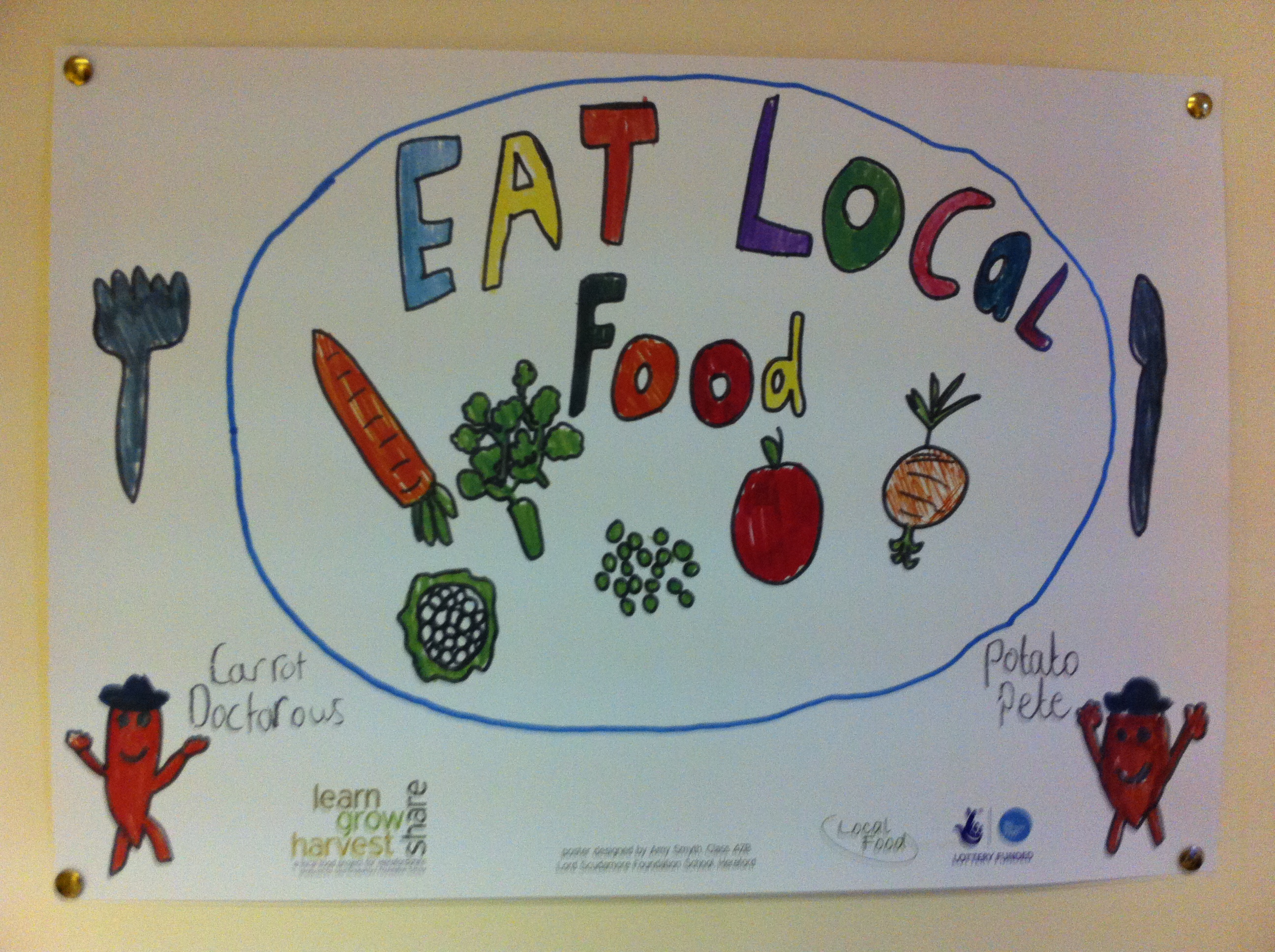

But he shares some unexpected perspectives with me in these edited highlights of our conversation which ranged from food, farming, floods, economies of scale and globalisation… COMING SOON!
Pedigree Phocle Herefords at Caplor Farm…


Old cider press in the barn…


Fownhope Farm Shop

The Fownhope Farm Shop has been my mainstay and local food hub since the start of this project. Conveniently located almost literally on my doorstep, there has been a farm shop selling local produce at Caplor for the past 6 years or so. Originally this was the farm’s own initiative with all the produce grown on the farm itself, supplying not only the shop but also local schools and restaurants. It then went through various iterations – including a local food and crafts shop staffed by farm residents – before being taken over this year by Dave and Elise Shuker. They now manage the polytunnel on the farm and also keep pigs and hens here, but they stock a range of produce from surrounding local food suppliers. Sourcing all the food locally is at the centre of their ethos, knowing exactly where and who it’s come from: their own eggs, honey from Brockhampton, apple juice from Carey Organics, their own veg (in season) supplemented by a range of vegetables from Aconbury, Allensmore, Bartestree, Holme Lacy and Stoke Edith. Before going for a walk with my friend Sue who is staying, I visit the shop today. I ask Dave to draw on my map the exact locations of the places where all the vegetables I’ve purchased so far have come from, so I can plan my walks there accordingly and maybe contact the producers. Below is an edited recording of one of our many conversations as I shop…
Audio Track: Fownhope Farm Shop


‘We ate with the seasons…’
Today Alison Parfitt (of the Wildland Research Institute amongst many other things!) joins me: my first ‘official’ guest to accompany me on a ‘performance’ walk. I haven’t planned very well for her visit and can’t decide where to go… When she arrives, we look at the map together. She would like to be a practical help in search of food and has brought along a large backpack for the purpose. I’d like to take her on an enjoyable walk that takes in some of the more scenic Herefordshire countryside. We settle on a walk over the Marcle Ridge through (a few) orchards to Westons, the cider producers where I hope I’ll be able to buy apple juice, and Much Marcle shop for eggs.
It’s still (literally) freezing. I still have no water in the caravan and every single surface outside – even the spiders’ webs – is covered in hoar frost: microscopic needles of crystalline blossom.

Alison’s lively enquiry into my practice is equally sharp but I’m glad of her presence and clarity – an antidote to the cold and the insidious slowness – helping to thaw my mind and bring into focus what I’m doing. As we walk, she asks me about the background to the project, which I start to describe as arising from my fascination both with simple notion of a day’s distance in a day’s time and what it could be used to draw attention to, to bring in to focus, to measure or calibrate. Then, how layered on to this came the notion of sustenance and what emerged was the concept of ’embodied mapping: drawing a map with my feet of the area that sustains me nutritionally’ and the sadness that we can’t always lead the local life we aspire to when we live rurally, in the place where all this food is grown because the infrastructure is now missing. I’m thinking specifically about the wheat, oats and oilseed rape grown on the farm – I talk about the roaring dragon of the grain dryer which drives us [farm-dwellers] demented with its day-long droning whine throughout August only for the grain to be shipped away again and sold. To me this is ‘extraordinarily inaccessible food’ and I talk about the notion of loss which Alison then goes on to summarise far more articulately : ‘ yes, it’s a loss of understanding, a loss of connection, a loss because we’re no longer in control of our food… we don’t even know where it goes and what happens to it. So it’s disempowering, really…’
With Sollers Hope church in sight, Alison asks. ‘So what are we performing?’… I respond cautiously ‘We’re performing slow activism and slow food in some kind of sliding together of lenses I think. The idea was that the structure of these walks – walking to find food, walking to the producers of food (even it’s not where I bought it I have to be able to walk to where it’s produced) was about drawing attention to what is there and what is there no longer, facilitating discussion, debate and discovery. And carrying that knowledge with me to each new encounter’.
I’m not feeling very articulate today, so I’m delighted when (as we are climbing steeply up the Marcle Ridge) she finds a way of clearly describing the essence of my practice – tracktivism as walking performance which foregrounds environmental concerns – far more clearly than my own fumbling attempts to liken it to bas-relief and the notion of removing something that obscures to allow what is there to emerge. No, she says helpfully, ‘it’s more subtle than that. It [the environmental/political ‘truth(s)’] is not obscured by something ‘other’ that needs removing, it’s the practice which reveals what IS there…’
I like this. As we walk on, I wonder what is left revealed in our wake.
—-
We walk into Much Marcle where I buy eggs (Kynaston) and juice (Aylton) from the village shop and record an interesting encounter with the shopkeeper, sharing his wonderful childhood reminiscences of rural life and local food in Oxfordshire where his father managed many gardens and allotments and they ‘ate with the seaons..’:
We then turn back on ourselves to call in at the Westons shop on the way home. Here they stock the full range of Jus single variety apple juices from sweet Egremont Russett and Worcester Pearmain through medium Coxs, Katy and Discovery to the dry Bramley Seedling (my absolute favourite). I intend to journey to Aylton later this month to talk to the Skittery family. Their juices have been my emergency energy food this month in the absence of fresh apples which I’ve not been able to source locally. This in itself points to another type of loss – the loss of knowledge of how to think slowly in the longer term and store our produce to eat out of season…


Local hangover for local people
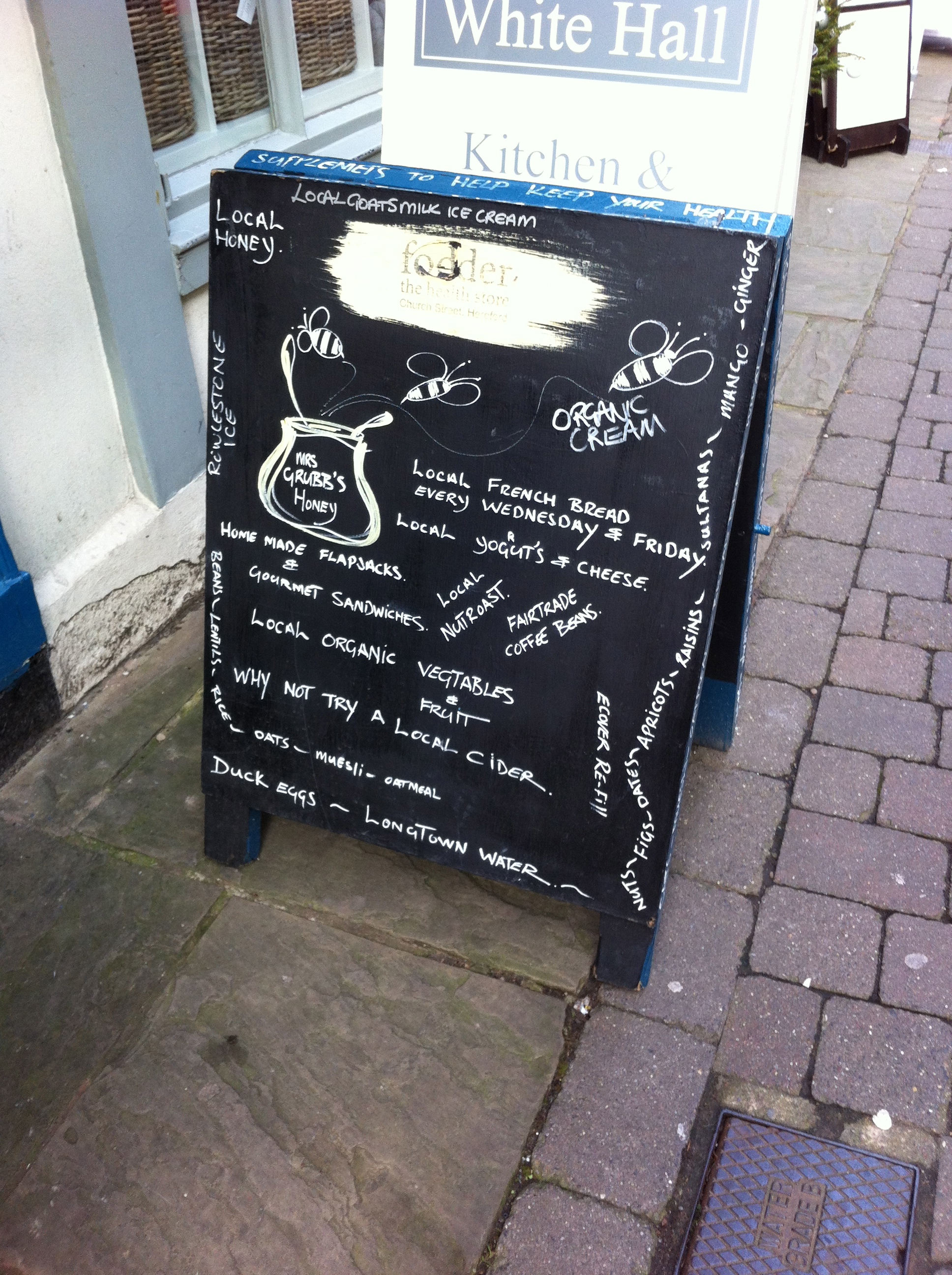
Today, thanks to the generosity of friend Hugh, I’m mildly hungover (largely sleep deprivation from late conversation) on his family’s local and delicious Once Upon a Tree cider and perry from Dragon Orchard at Putley. But I still have to walk 9 miles home in -1 cold. I pop into Hereford city centre first, but even at the wholefood shop, I’m surprised that, today at least, I can’t find produce that can be guaranteed within walking distance of home (which is not to say there is not a lot of produce from elsewhere in Herefordshire of course).
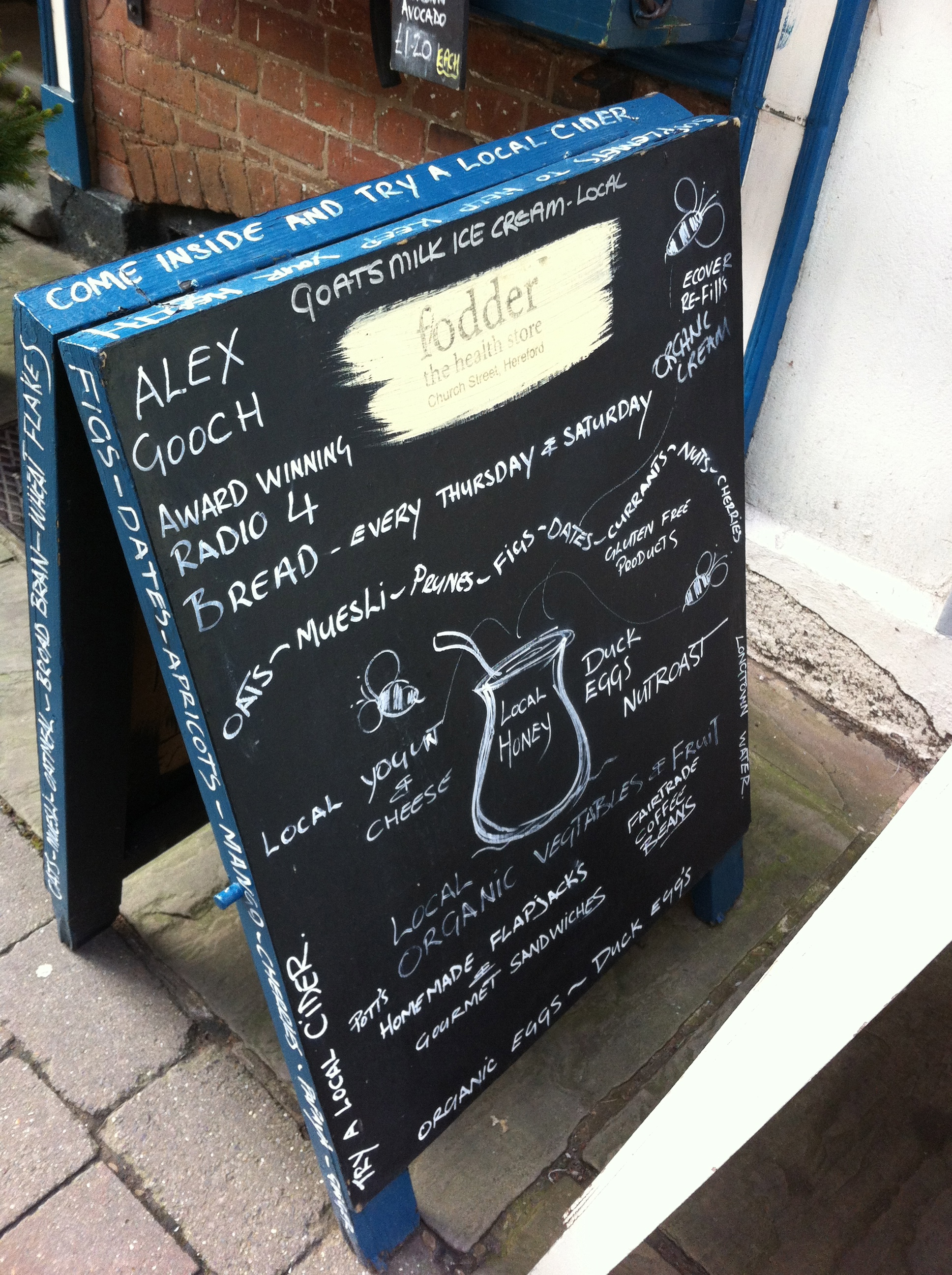
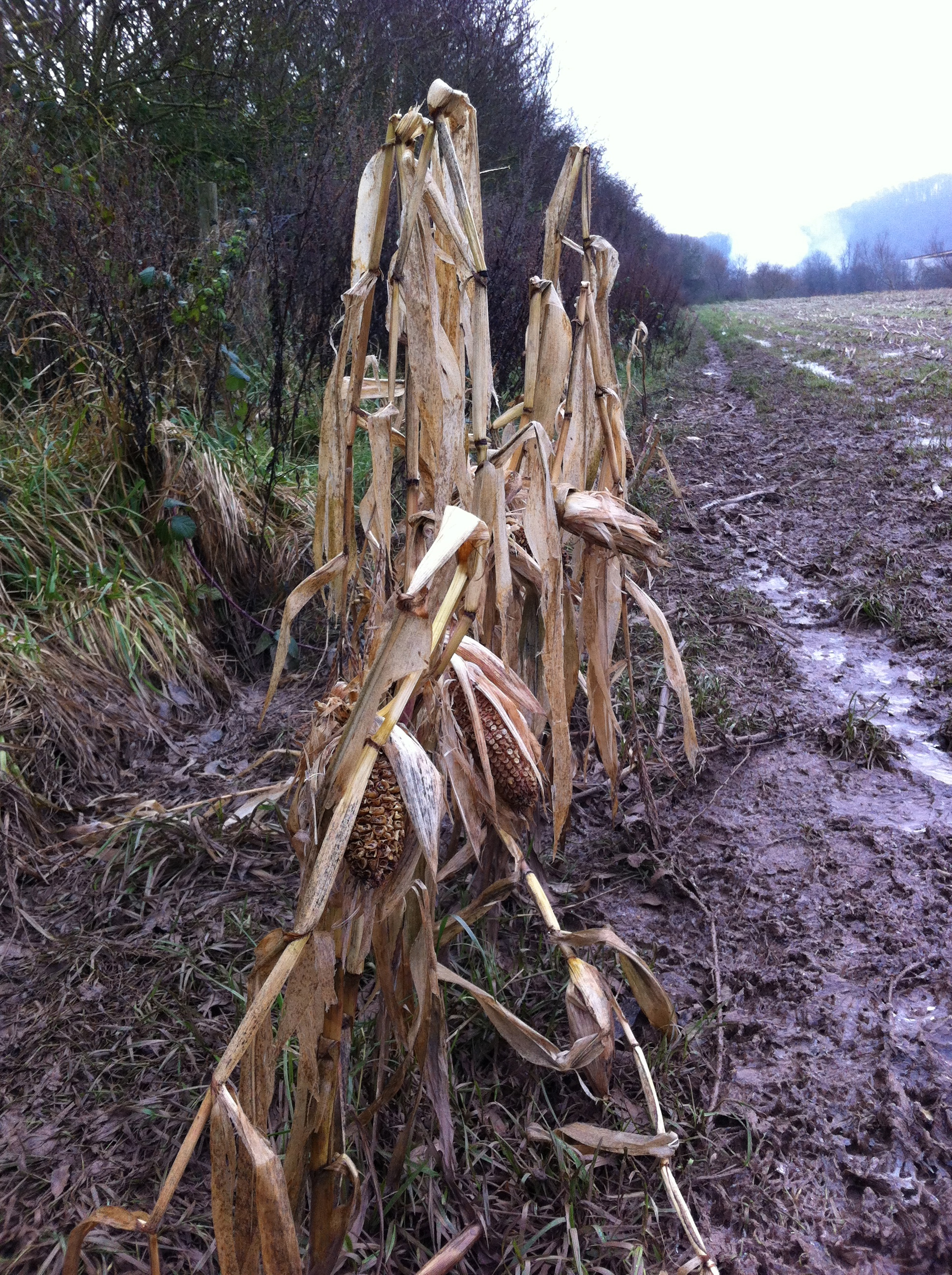
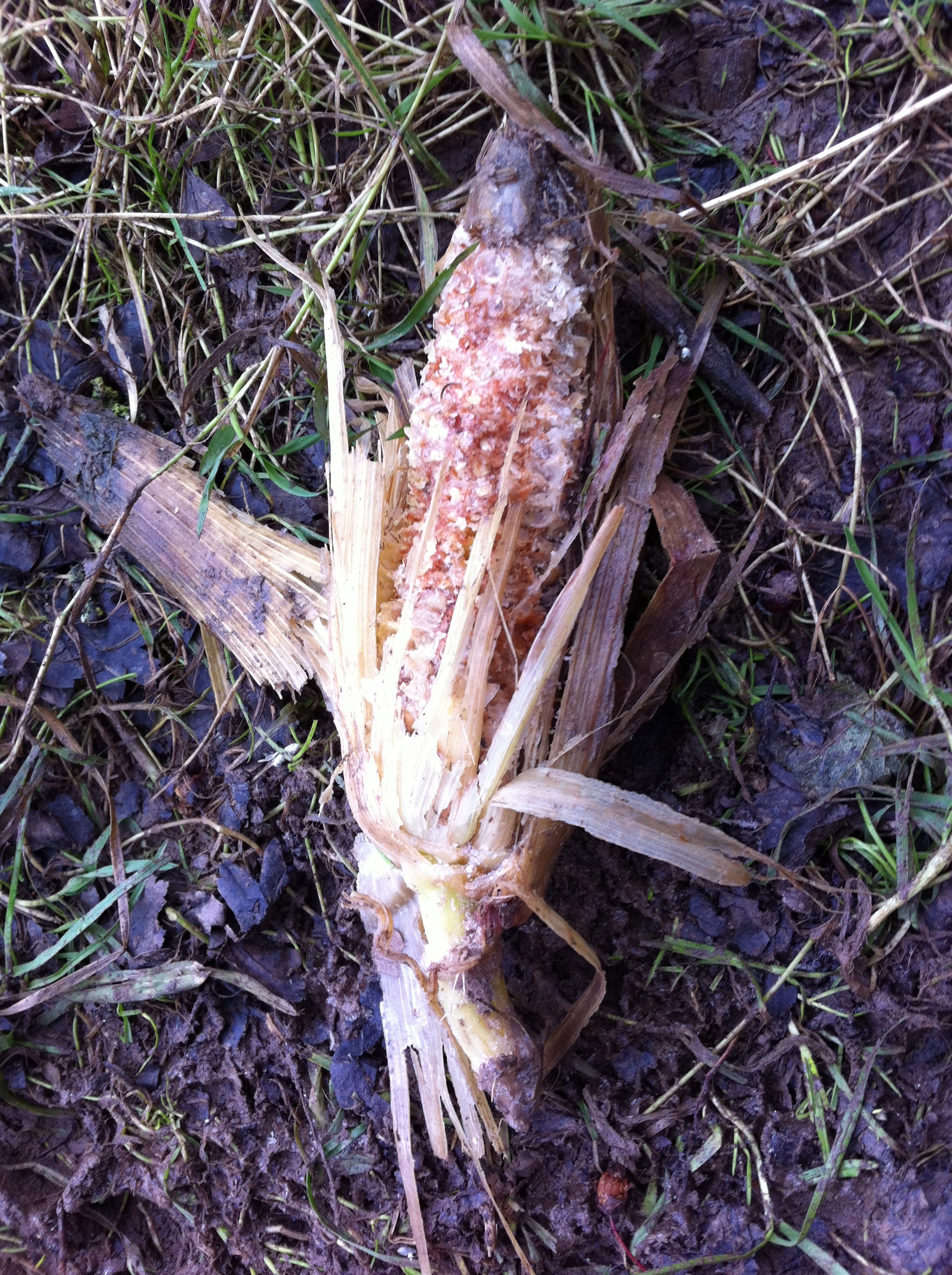
On the way back, in daylight this time, I realise that last night I was walking across a harvested field of corn (maize) next to the river Wye. I am so hungry it makes me wistful for my last supper of popcorn.
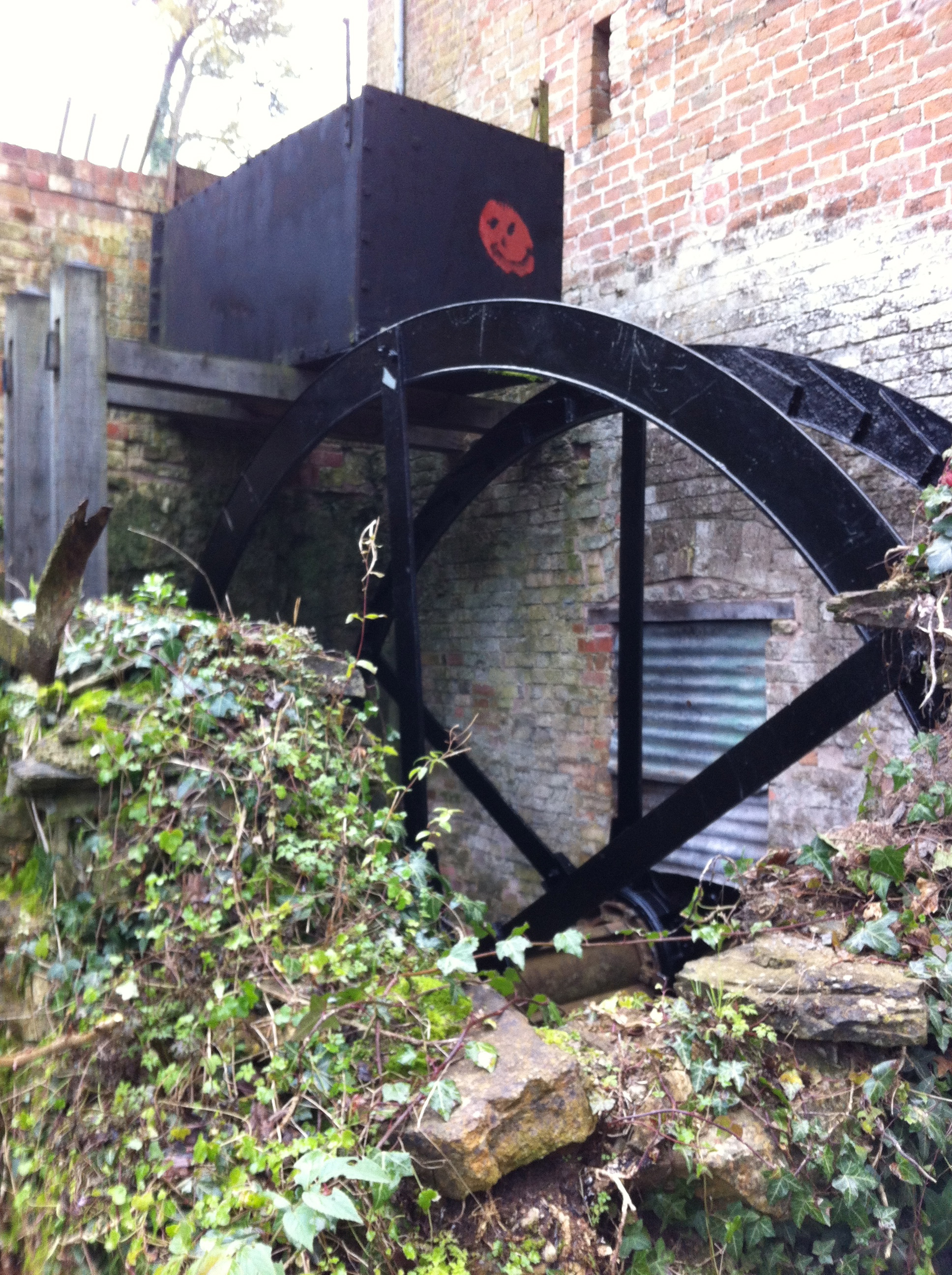
Half a loaf of sourdough loaf comes home with me in my rucksack. My fascination with this walked connection of mill to grain to loaf continues. At Mordiford, I stop to record the sound of the river at the mill
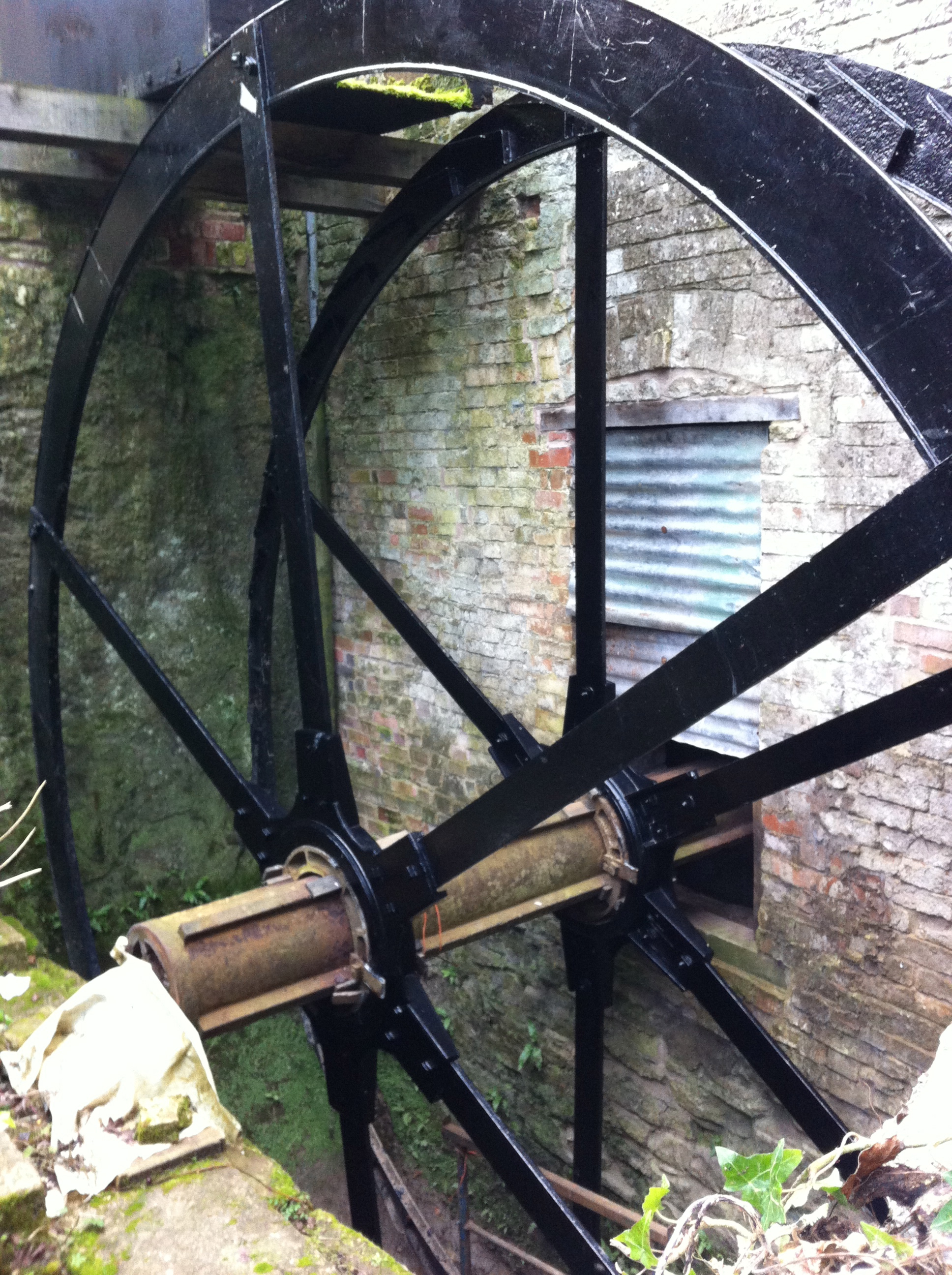
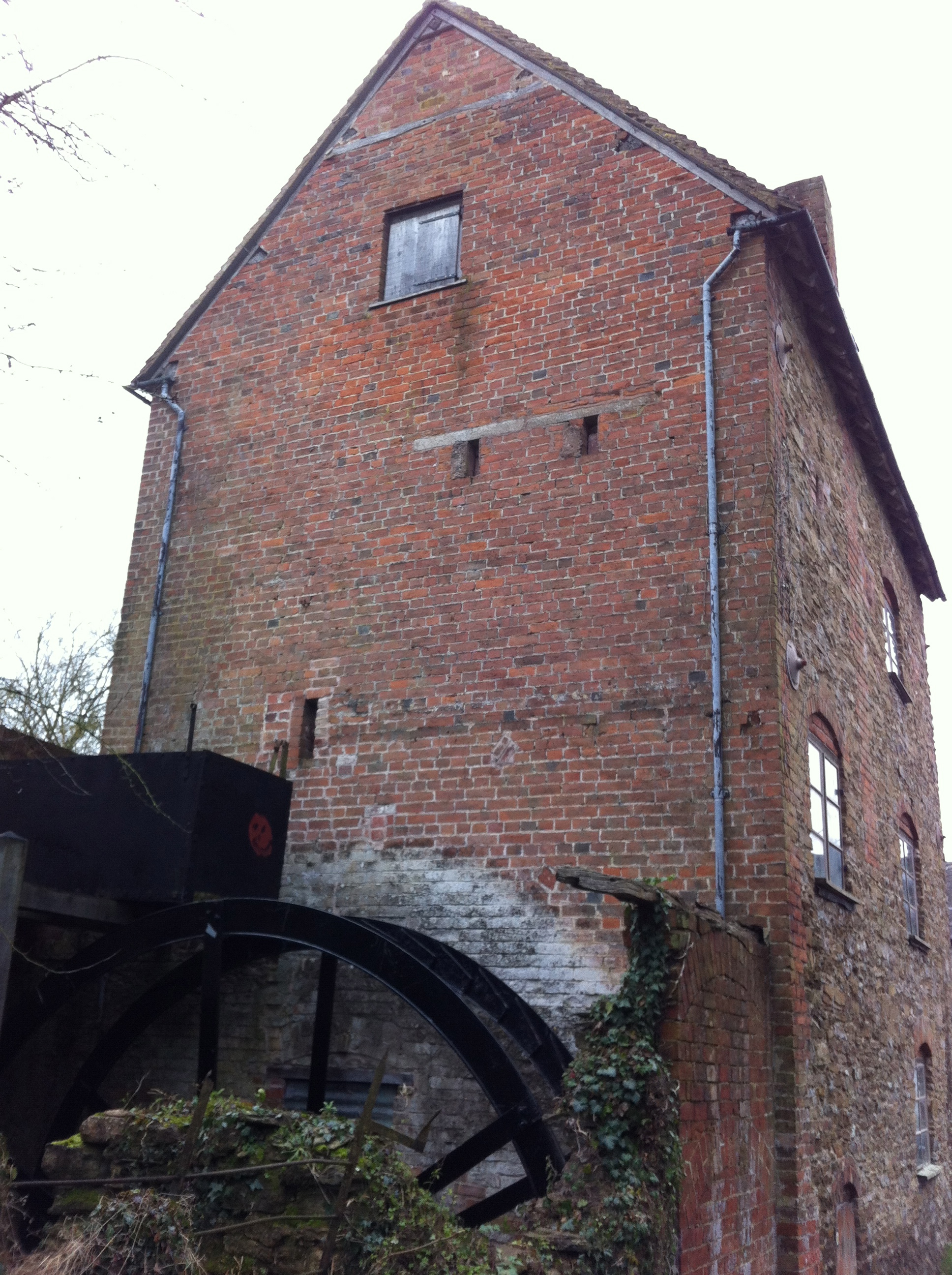
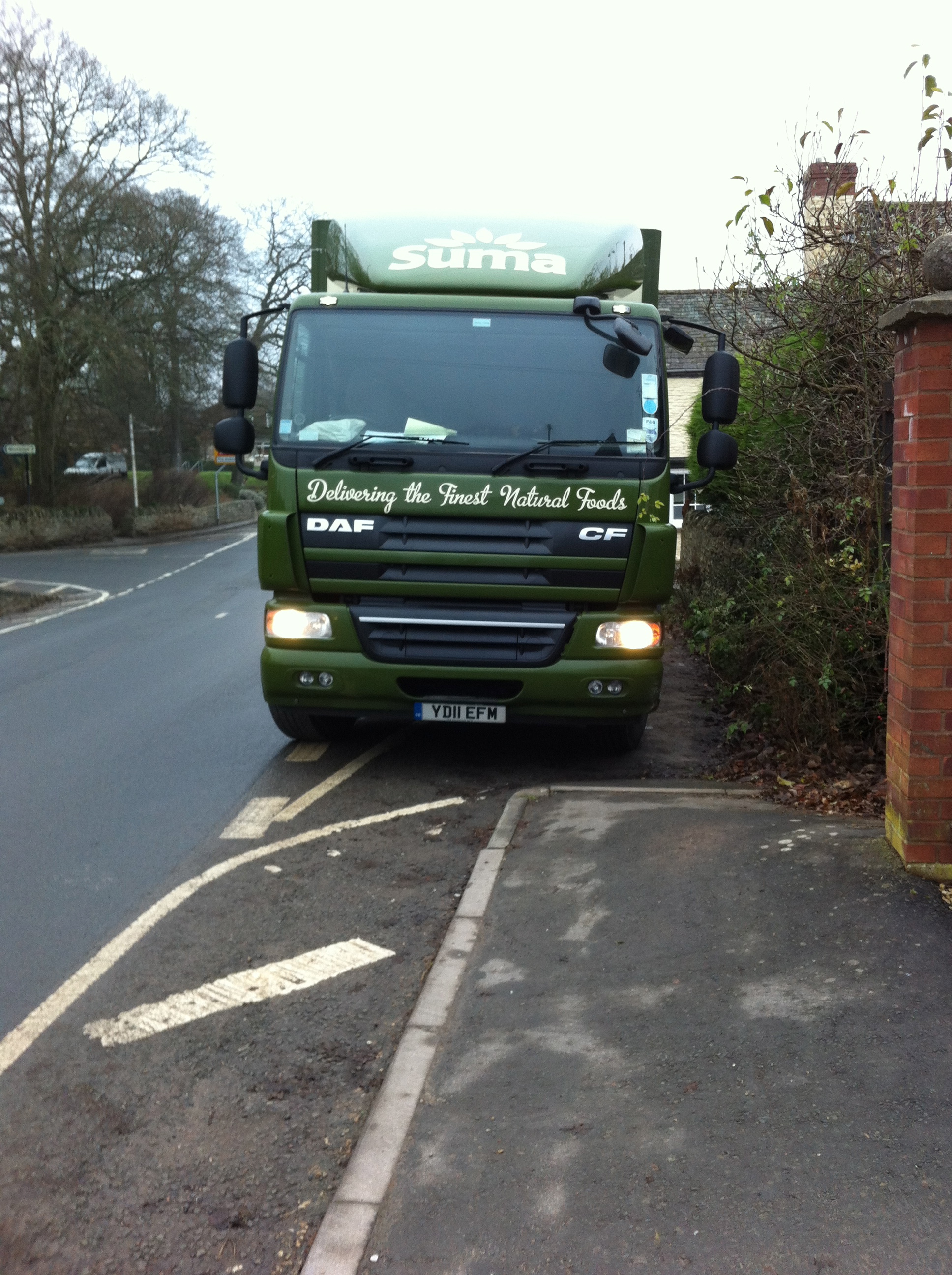
Then returning home through the village, I see a Suma (wholefood cooperative extrordinaire) delivery van and look longingly inside as I pass. I can’t believe I’m suddenly fantastising about food miles…


 All in a Day's Walk