All in a Day's Walk
A month-long slow food walking performanceArchive for December, 2012
Local hangover for local people
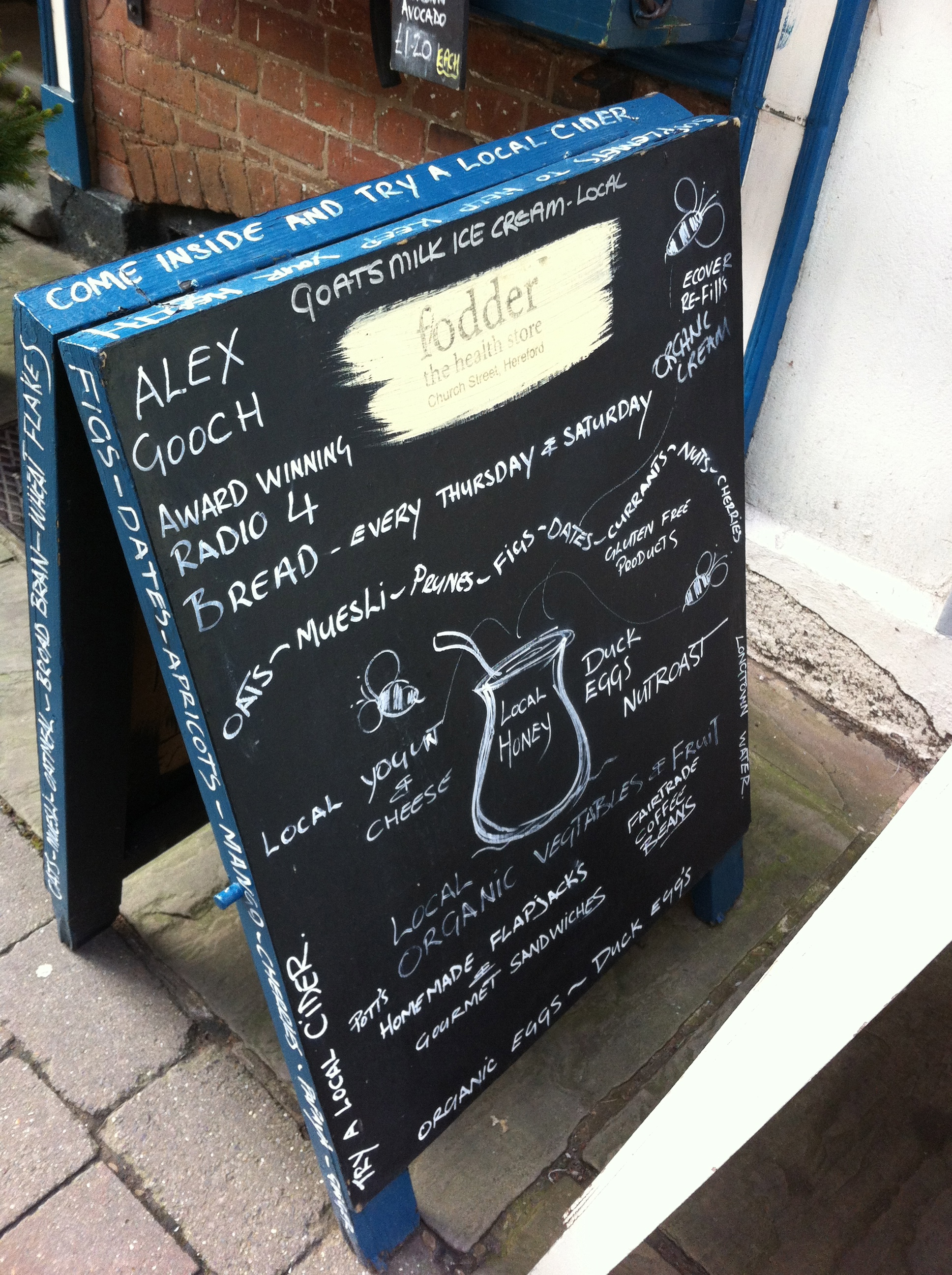
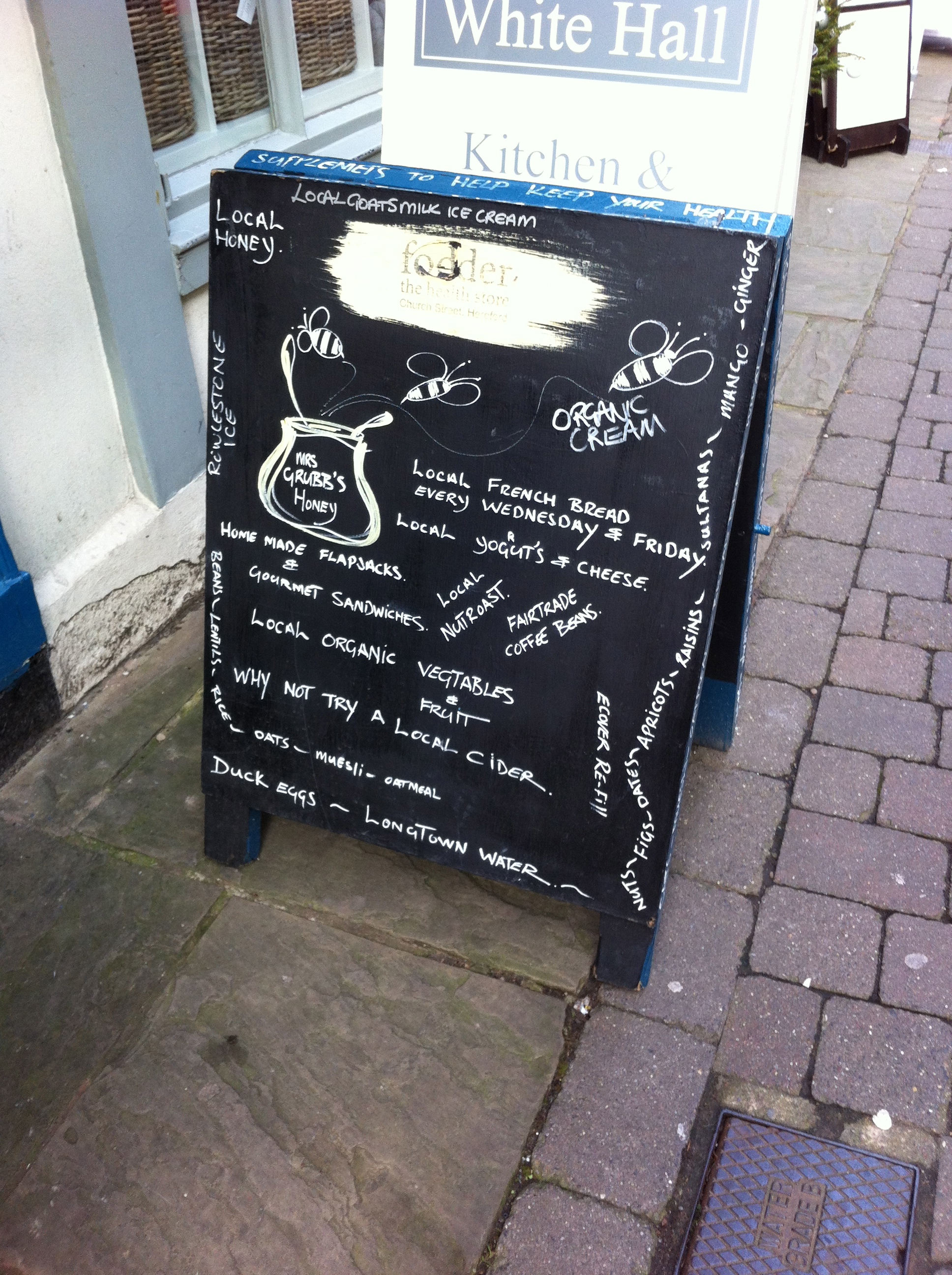
Today, thanks to the generosity of friend Hugh, I’m mildly hungover (largely sleep deprivation from late conversation) on his family’s local and delicious Once Upon a Tree cider and perry from Dragon Orchard at Putley. But I still have to walk 9 miles home in -1 cold. I pop into Hereford city centre first, but even at the wholefood shop, I’m surprised that, today at least, I can’t find produce that can be guaranteed within walking distance of home (which is not to say there is not a lot of produce from elsewhere in Herefordshire of course).
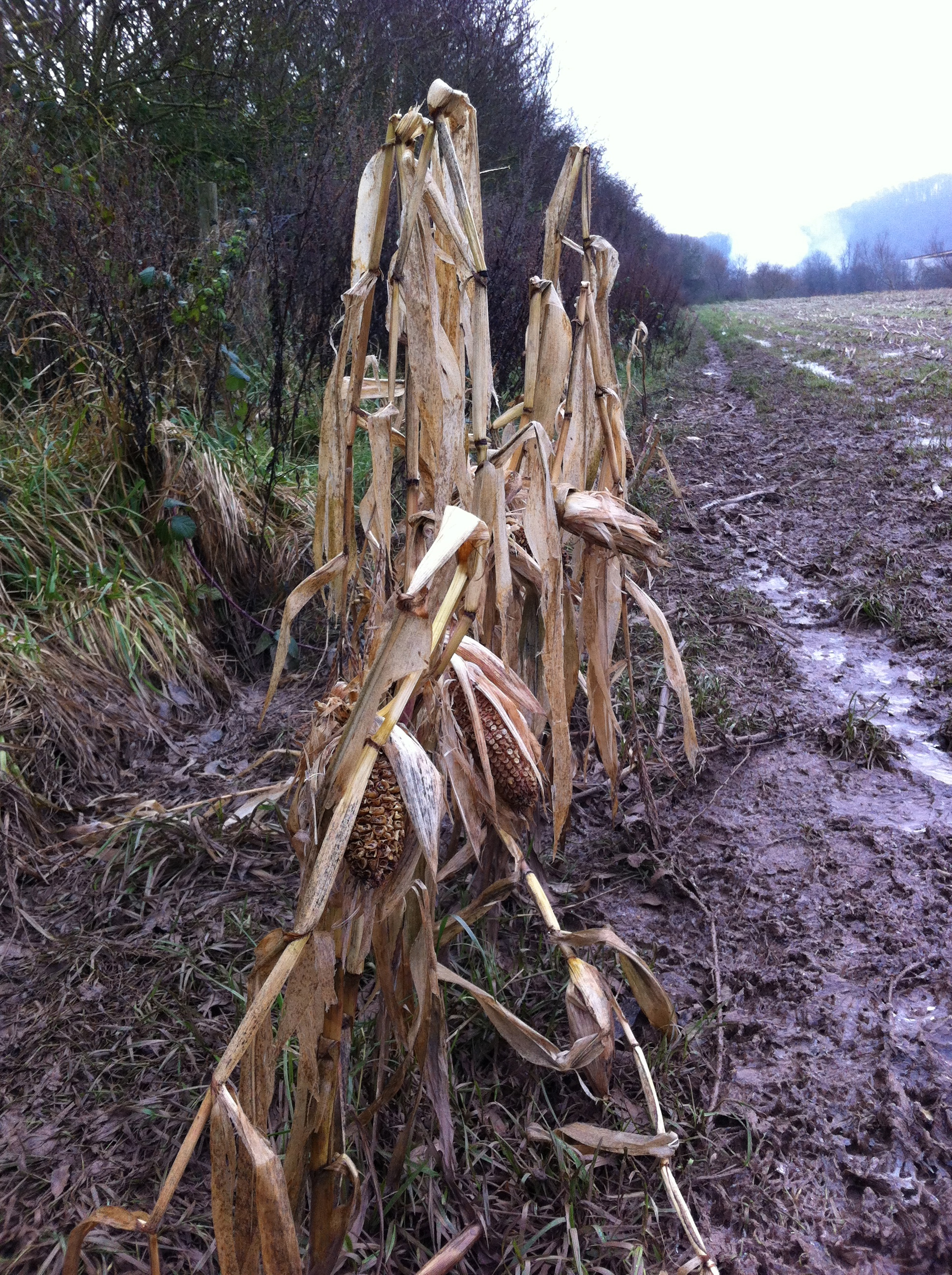
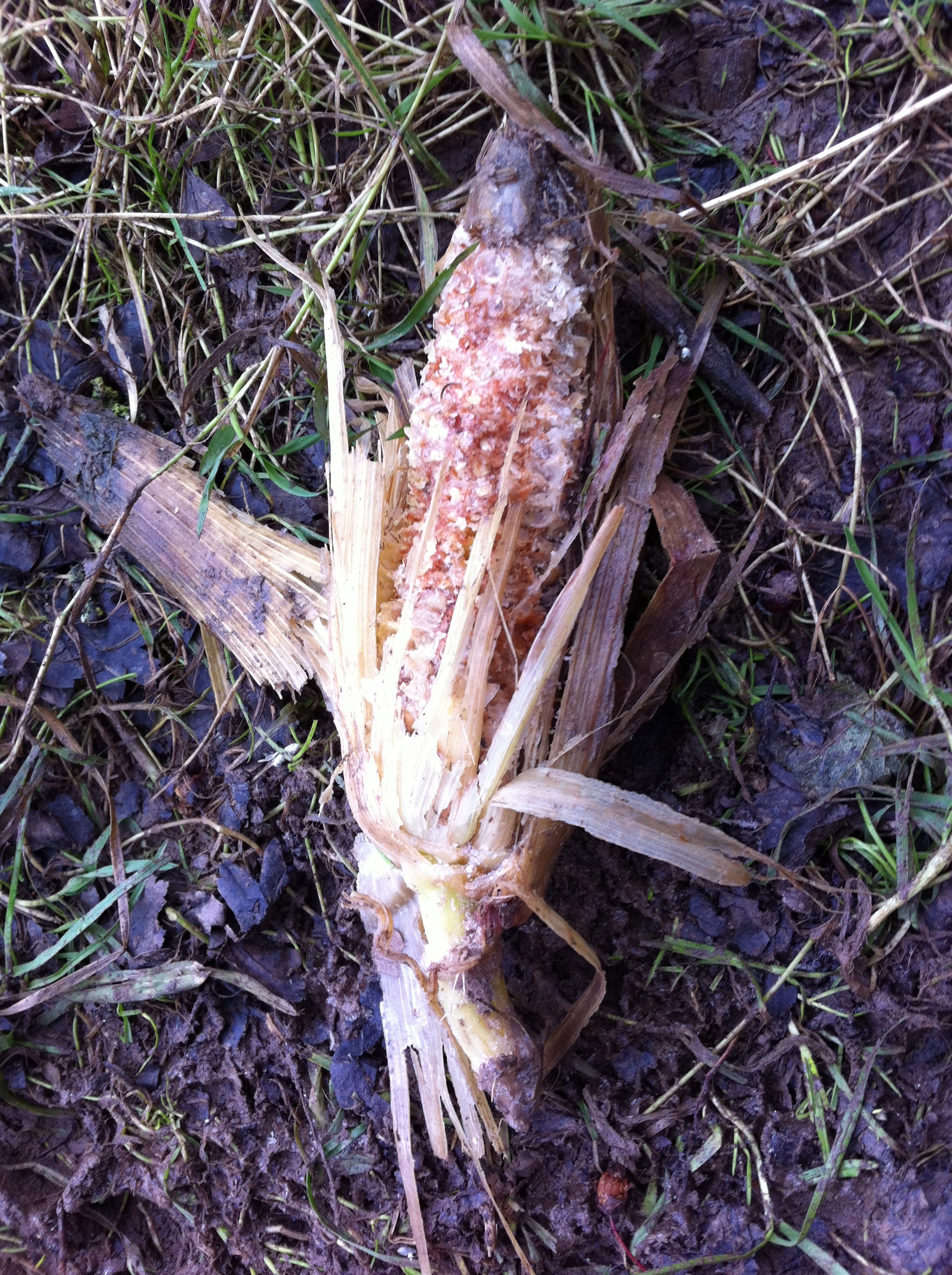
On the way back, in daylight this time, I realise that last night I was walking across a harvested field of corn (maize) next to the river Wye. I am so hungry it makes me wistful for my last supper of popcorn.
Half a loaf of sourdough loaf comes home with me in my rucksack. My fascination with this walked connection of mill to grain to loaf continues. At Mordiford, I stop to record the sound of the river at the mill
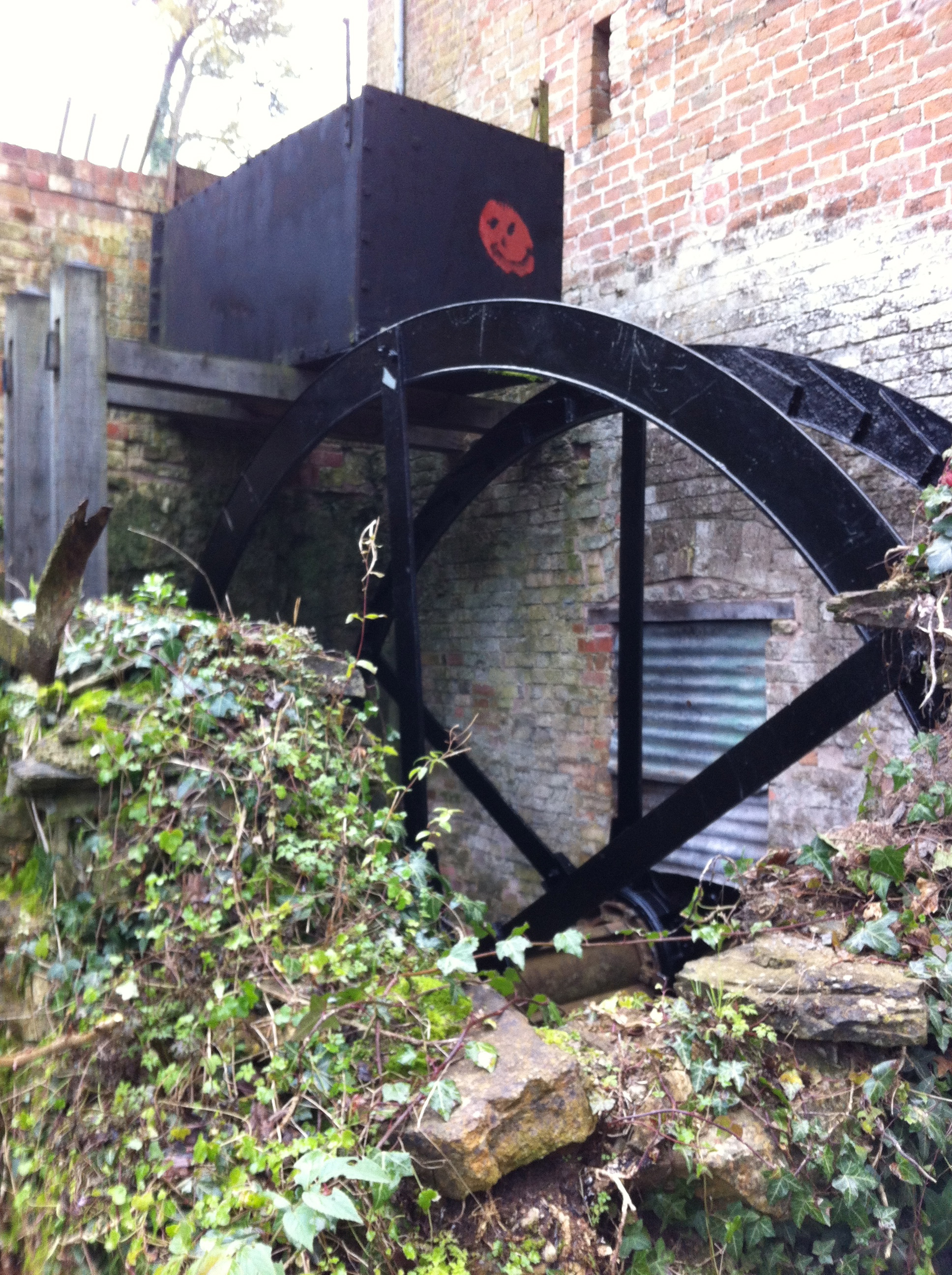
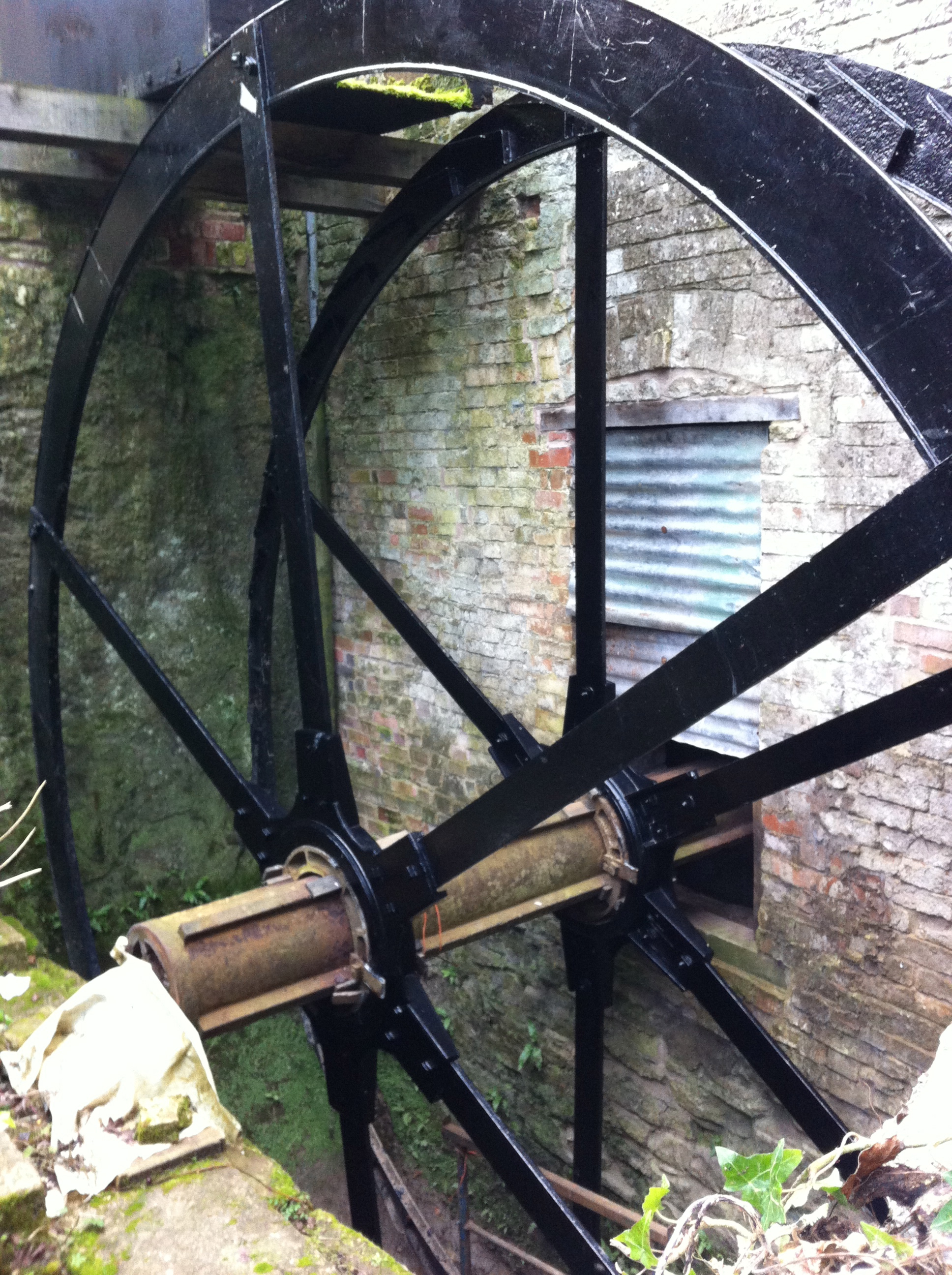
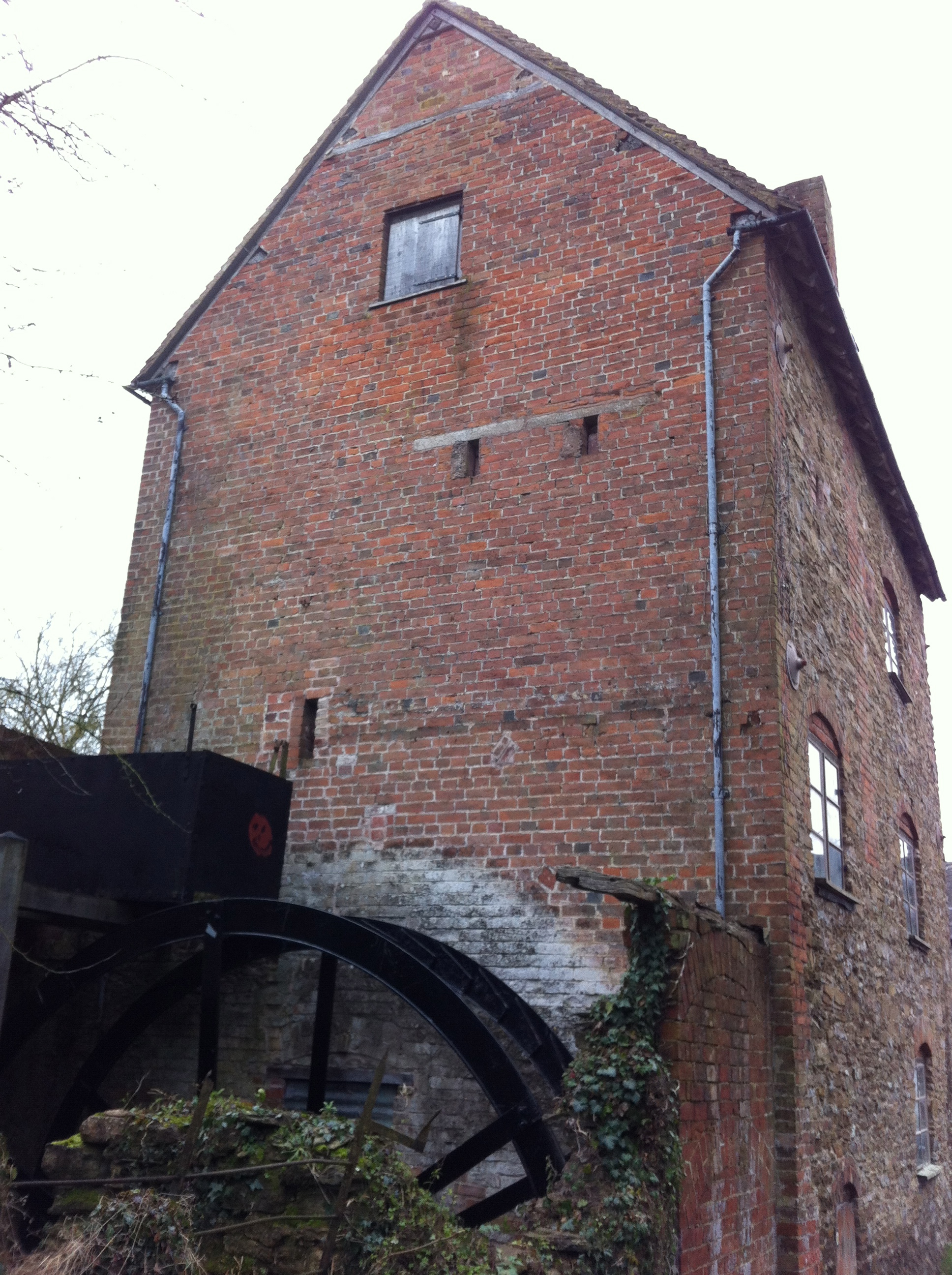
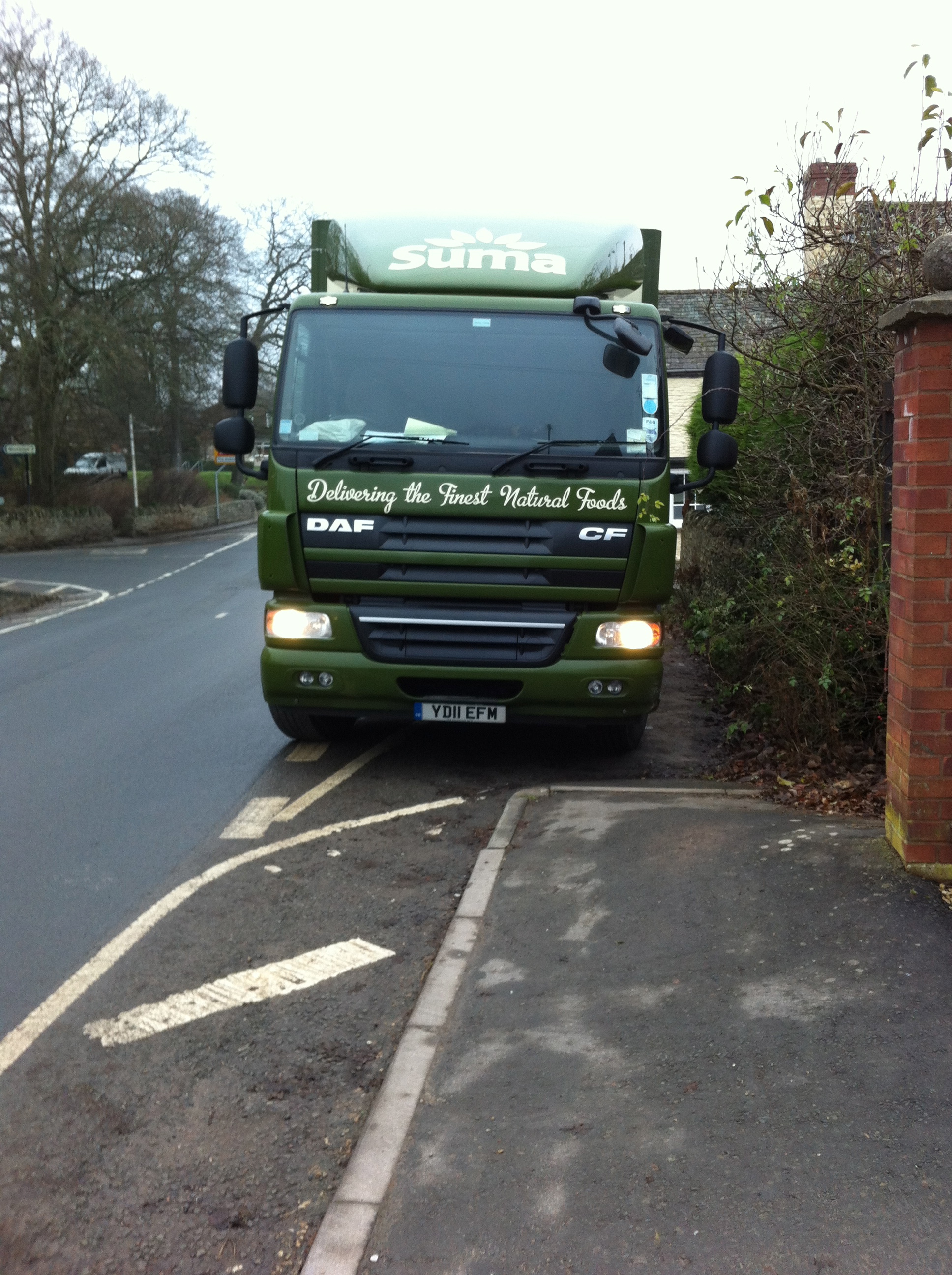
Then returning home through the village, I see a Suma (wholefood cooperative extrordinaire) delivery van and look longingly inside as I pass. I can’t believe I’m suddenly fantastising about food miles…
My knapsack full of sourdough
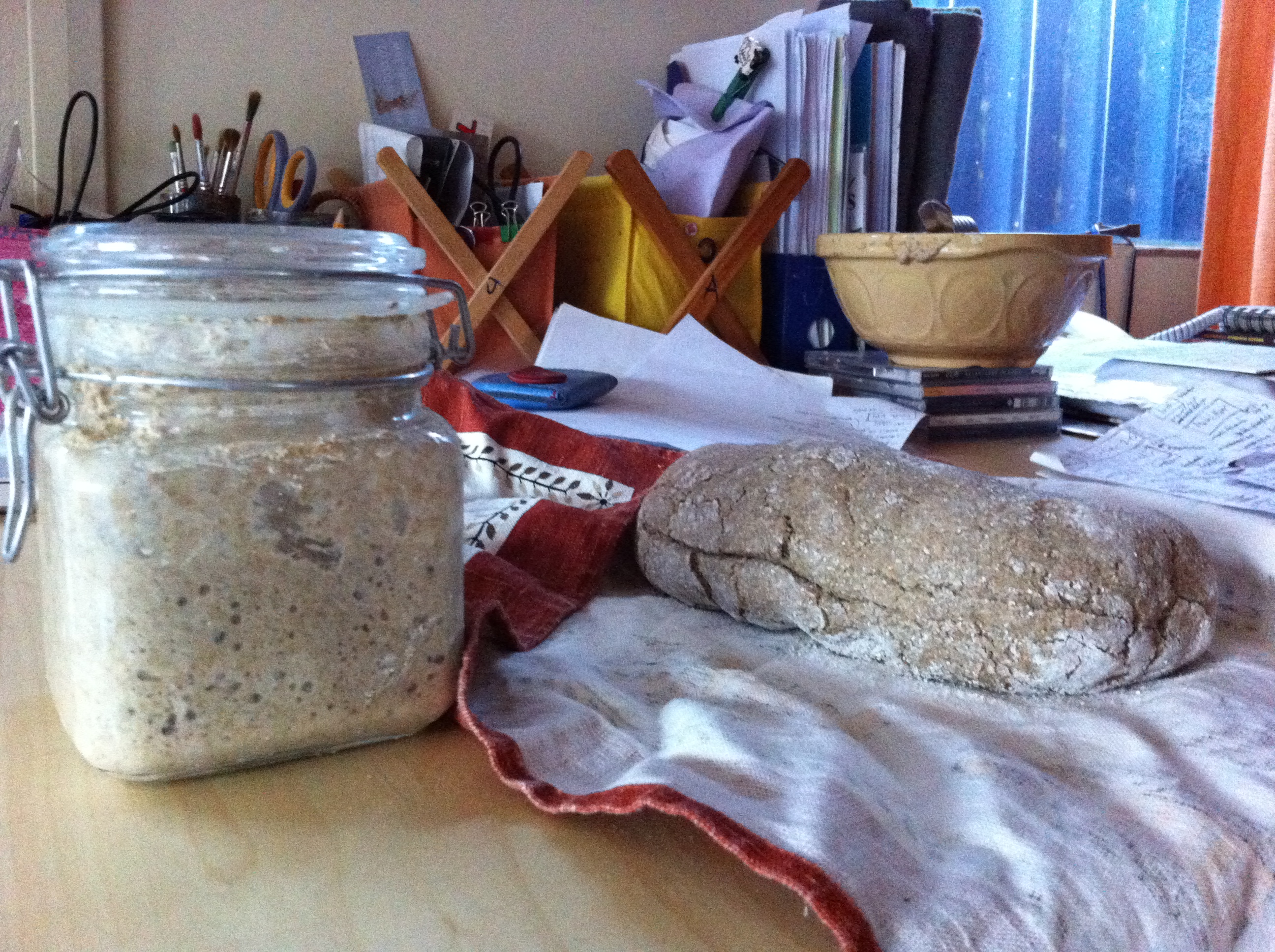
The rye sourdough leaven gifted to me by Gail Sayce on Saturday is refreshed and ready! The yeast – naturally occurring on rye grains – is busy bubbling away. This means I can make proper, leavened bread.
I follow Dan Lepard’s 100% sourdough recipe from The Handmade Loaf (2004, p. 31), making a gelatinised rye mix from hot water and rye flour, whisked into 200g of the leaven and then forming a dense dough by adding more dry rye flour (no salt). I roll it into a baton as instructed before, too late, I realise it won’t fit in my pot. So I turn it into a crab.
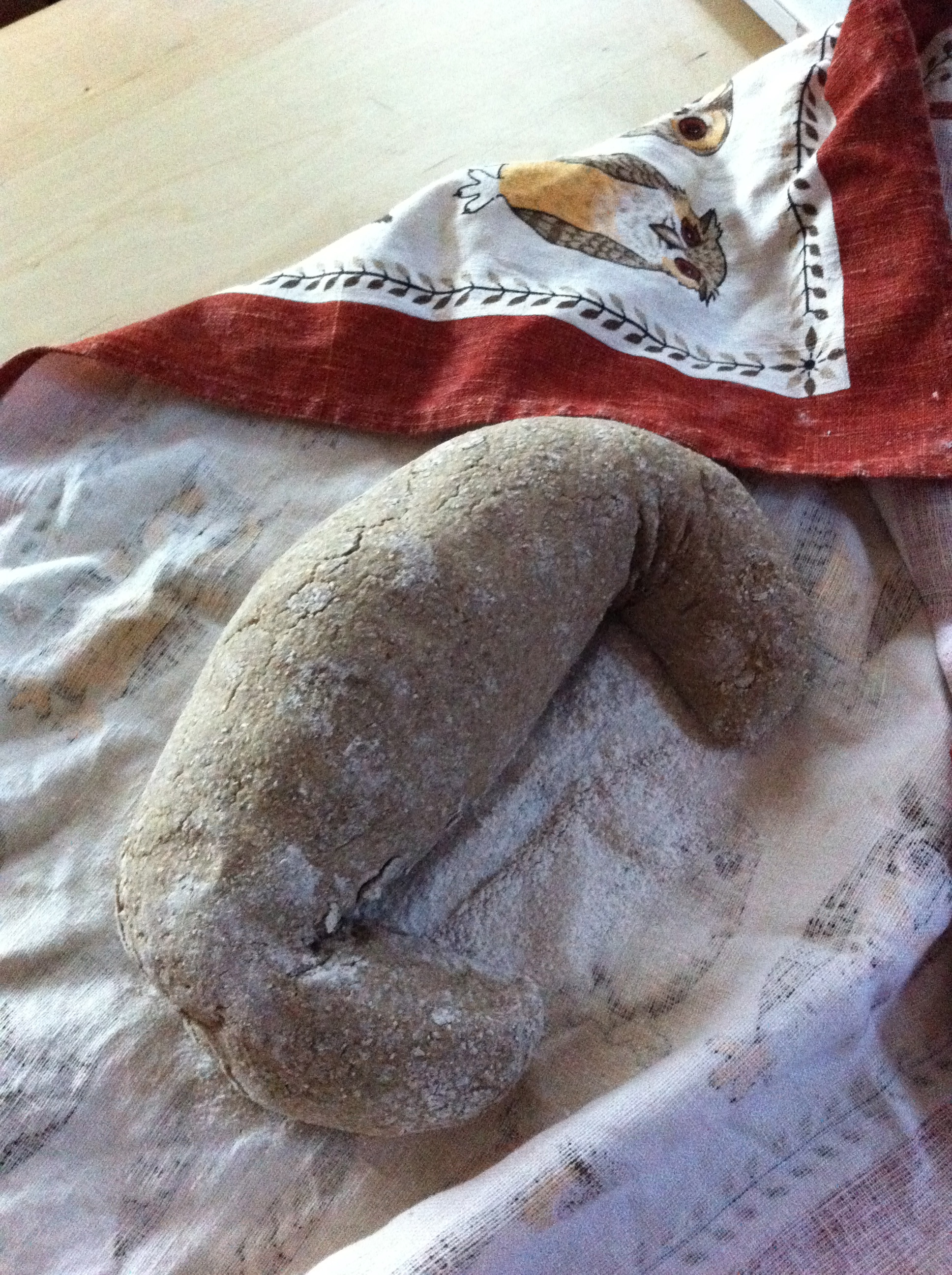
I then realise it’s meant to rise for 5 hours. Disaster! My walk of today is 8 miles into Hereford this evening to visit friends, so I won’t have time to let it rise and cook it on the burner. Then I realise I can take it with me. So, some hours later, I swaddle up the still-rising dough like a baby (crab) and put it in my rucksack, packed against my back for warmth. Then I walk through a cloudless, moonless gloaming which becomes proper, full-blown, dark, subzero night at Mordiford along the Wye Valley Walk into Hereford: along the stank with the Lugg invisibly rushing to my right and then, crossing at Hampton Bishop. The dough-baby-crab arrives looking somewhat premature: a bit grey and not quite well-risen. We bake it in Lucia’s kitchen and I eat my first leavened bread.
There is initial excitement when we think that I can have it with her homemade damson jam because the fruit is from a nearby farm at Martley. Thankful for the deliciousness, it goes on the dry and somewhat unsuccessful bread until 11-year-old Esme comes home and asks, with uniquely youthful attention to the rule of the game: ‘But what about the sugar?’
Oops.
But it’s good to know that I’m making other people think about where their food comes from.
Mumpets and miracles
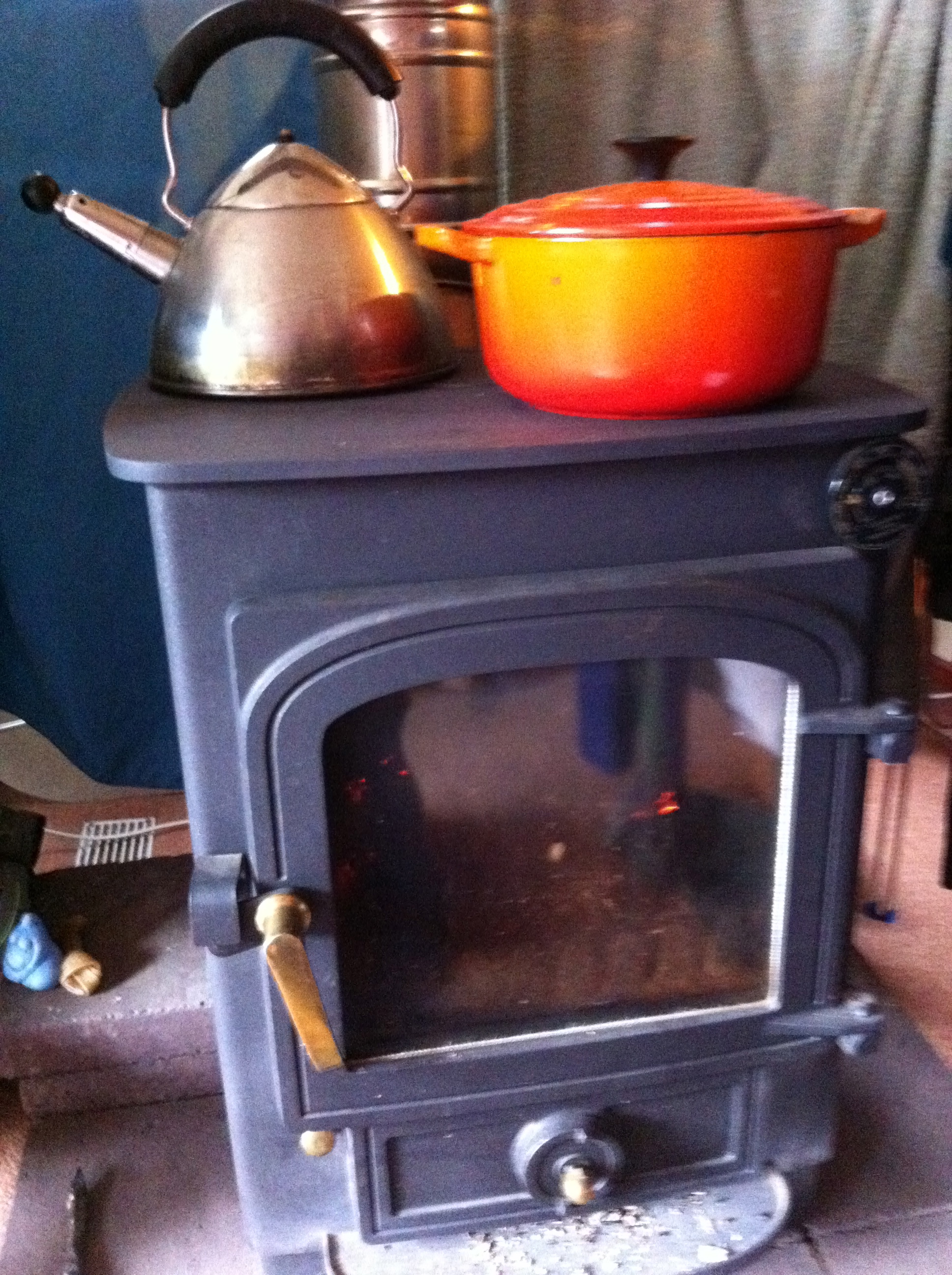
It’s the sabbath, and so (going with the environmentalism-as-religion theme that seems to be emerging) I rest.
But a friend is visiting and I want to be hospitable – a strange conundrum for an environmentalist at the best of times when the desire to produce generously large quantities of food for guests is set against the idea of preventing waste and avoiding excess. Inexplicably, I’m still struggling to understand how to feed myself properly and palatably let alone anyone else. Inexplicably because, while I’m picking up delicious vegetables from the farm shop, they alone don’t seem to be giving me enough energy or texture or flavour – especially in the absence of herbs and spices, salt, pepper and anything else that is not strictly local. Yesterday, Woolhope baker and miller Gail Sayce gave me some of her rye sourdough leaven. I refreshed it when I got home (100 ml of water at room temperature, 100 g of rye flour) and will again today, but it won’t be ready to use to bake leavened bread until tomorrow.
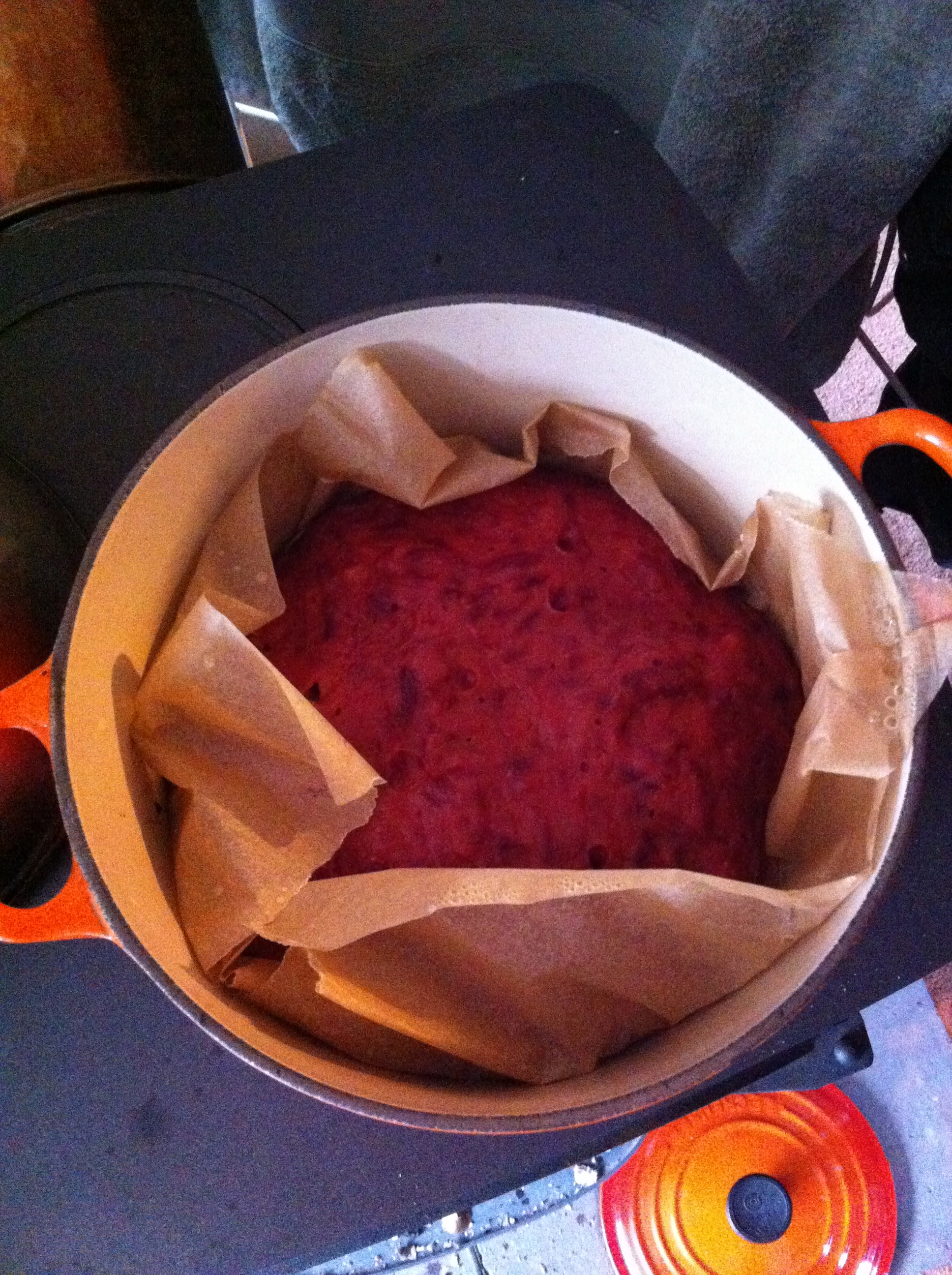
I settle on a menu of root stew with rye/spelt flatbreads followed by an improvised attempt at fatless beetroot cake (fatless because I’m allergic to dairy and while oilseed rape is grown on the farm, it is pressed and processed elsewhere; beetroot because it’s sweet and pretty).
My friend arrives when I’m midway through making (up) the beetroot cake, beating in eggs to the mixture. Already, my tastebuds are grateful for the slightest flavour, colour, texture, calories: the sweetness of raw carrot, the richness of egg yolk. I say I’m reminded of one of my favourite lines in a book (Judy Budnitz (2000) If I Told You Once) ever and I get it off the shelf to read, realising it has more resonance to my current situation than I’d realised:
‘My family had lived in the same village for as long as anyone could remember. It was a place that lay buried in snow for nine months out of the year followed by three months of mud. It was the most desolate spot on earth and my family did not even realise it, because for generations they never ventured more than 40 km from the place. They were stubborn people.
It was a place where someone had forgotten to add the colour: low grey clouds, crooked houses of weather-beaten wood, coils of smoke rising up from cookstoves and rubbish heaps. All the wives of the village cut from the same dull cloth to make clothes for their familites. We ate grey bread. The men made a fermented liquor so colourless it was invisible, nothing but a raging headache stoppered in a jar.
People were simpler then. They kept their desires within reach. They had few possessions: a goat, a half-dozen chickens, a brass teapot, a cat so ugly it could kill mice merely by looking at them.
That was enough. After days cutting wood in the black forest with ice clogging their nostrils, the smell of a goat was a welcome thing.
In a place like that, the colour of an egg yolk was something of a miracle’
We go out for a walk anyway, but I ride Merlin. Cantering up the track back home, I realise this is the fastest I will travel this month. And suddenly the speed of a horse is a miracle too.
We return and eat more woodburner beetroot cake, agreeing that the texture is a cross between a muffin and a crumpet. We have, my friend triumphantly proclaims, invented m u m p e t s.
Mumpets
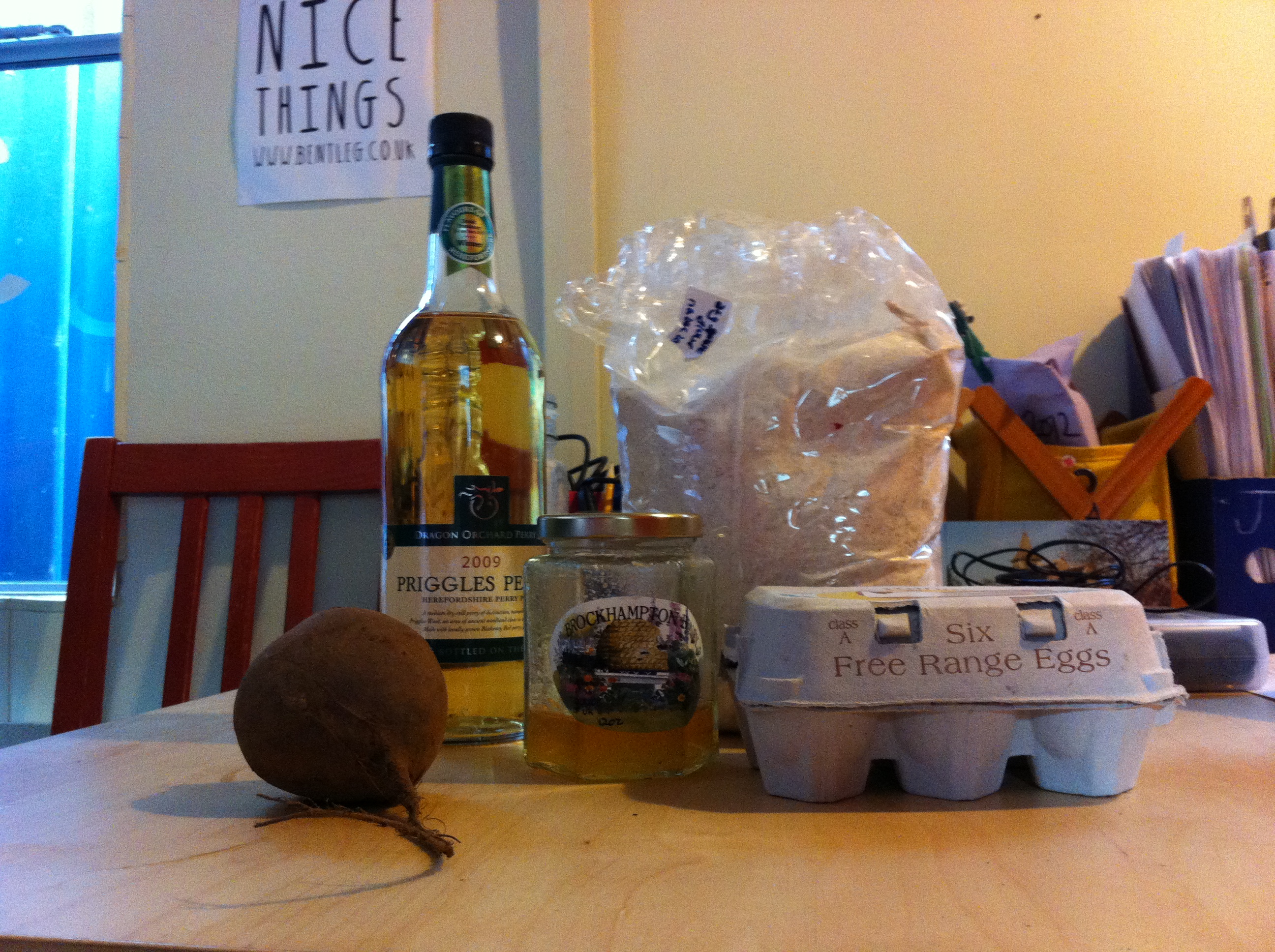
Ingredients
1 medium beetroot (Merrivale Farm, Aconbury (via Caplor Farm shop): 7.5 miles)
2 large eggs (Caplor Farm: 0.01 miles)
2-3 tablespoons honey (Dockhill Well, Brockhampton: 0.79 miles)
dash of cider/perry (Dragon Orchard, Putley: 6.53 miles)
spelt flour to create correct cake mixture type consistency (grain from Doves Farm, Hungerford 73.6 miles yikes, but milled at Yare Farm, 1.9 miles)
Equipment
Wood burner
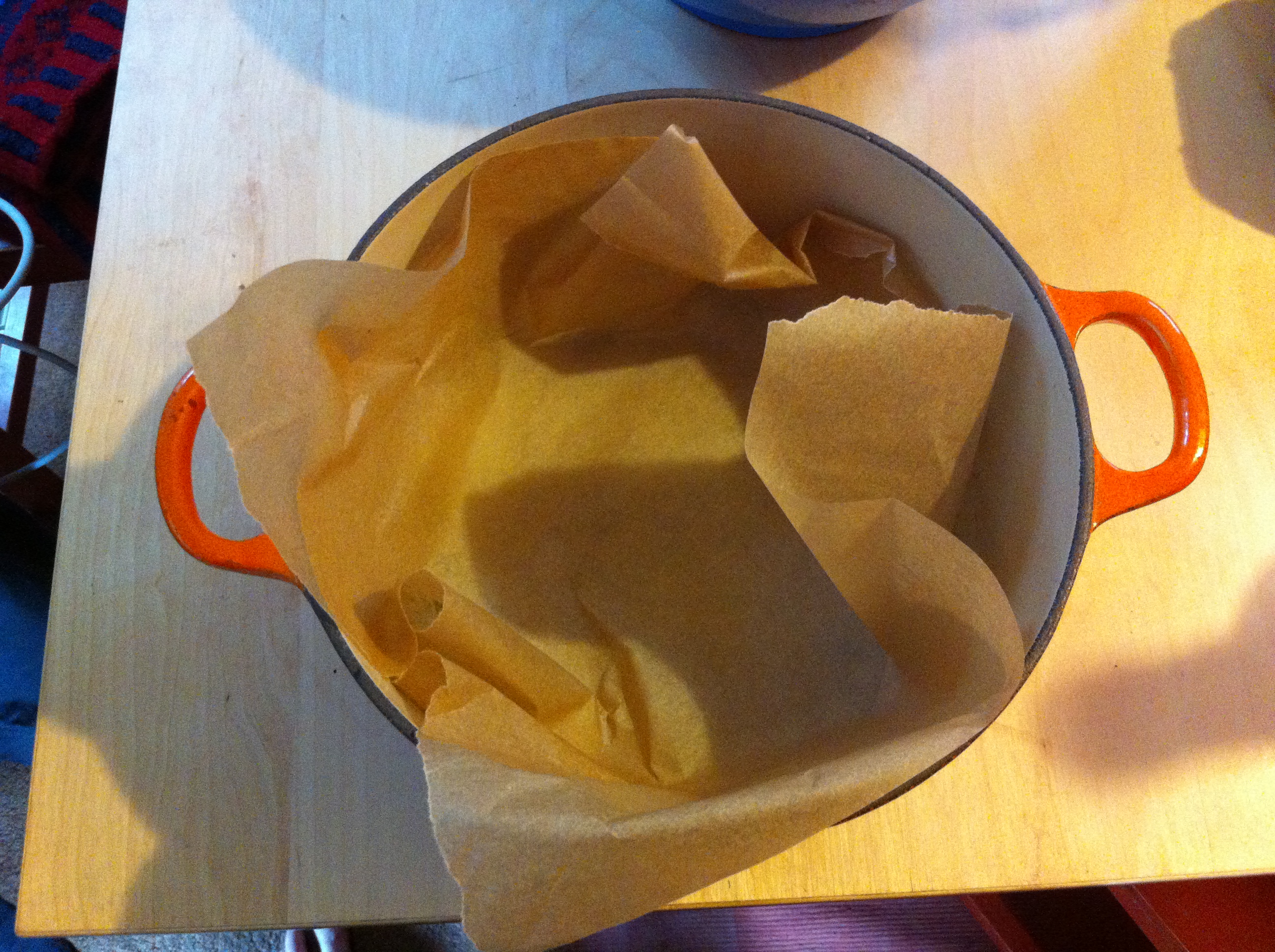
Cast iron lidded cooking pot or Dutch oven, lined with baking parchment
Method
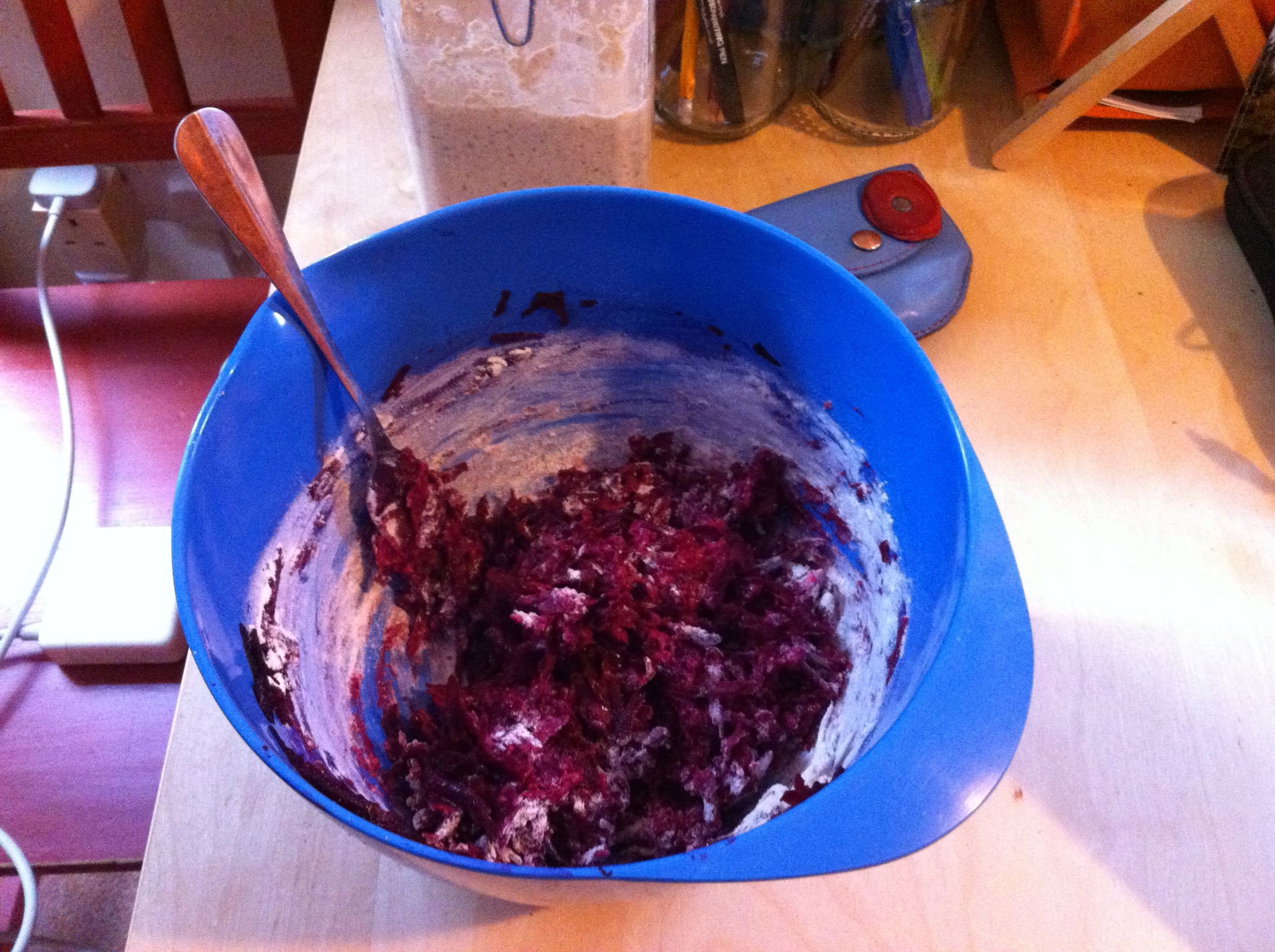
1. Peel and grate the beetroot (save the peelings for your eats-anything horse or compost bin)
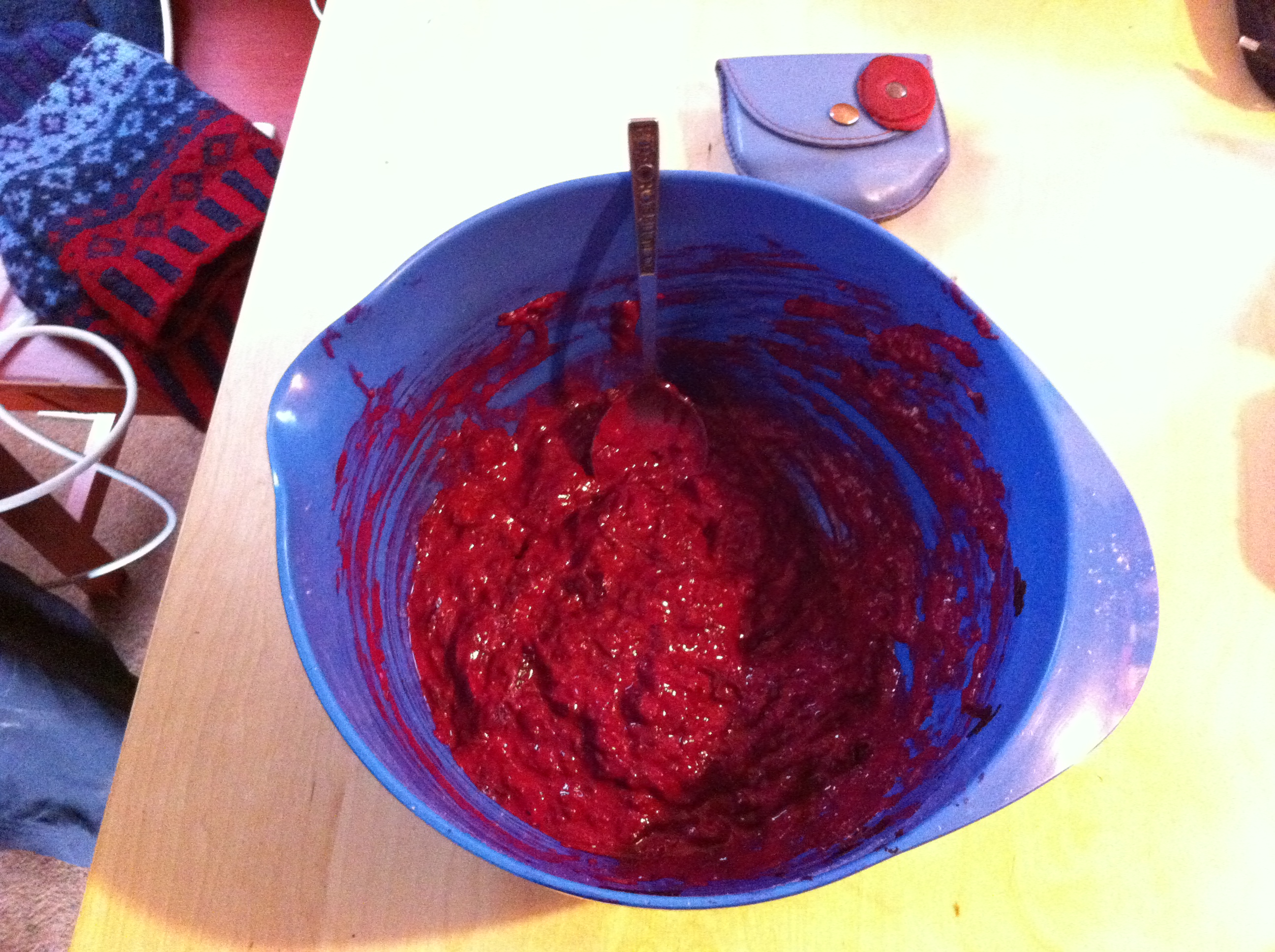
2. Add eggs and honey and a dash (to taste) of cider; mix well
3. Add enough spelt flour to create a correct cake-mixture type consistency; mix well again
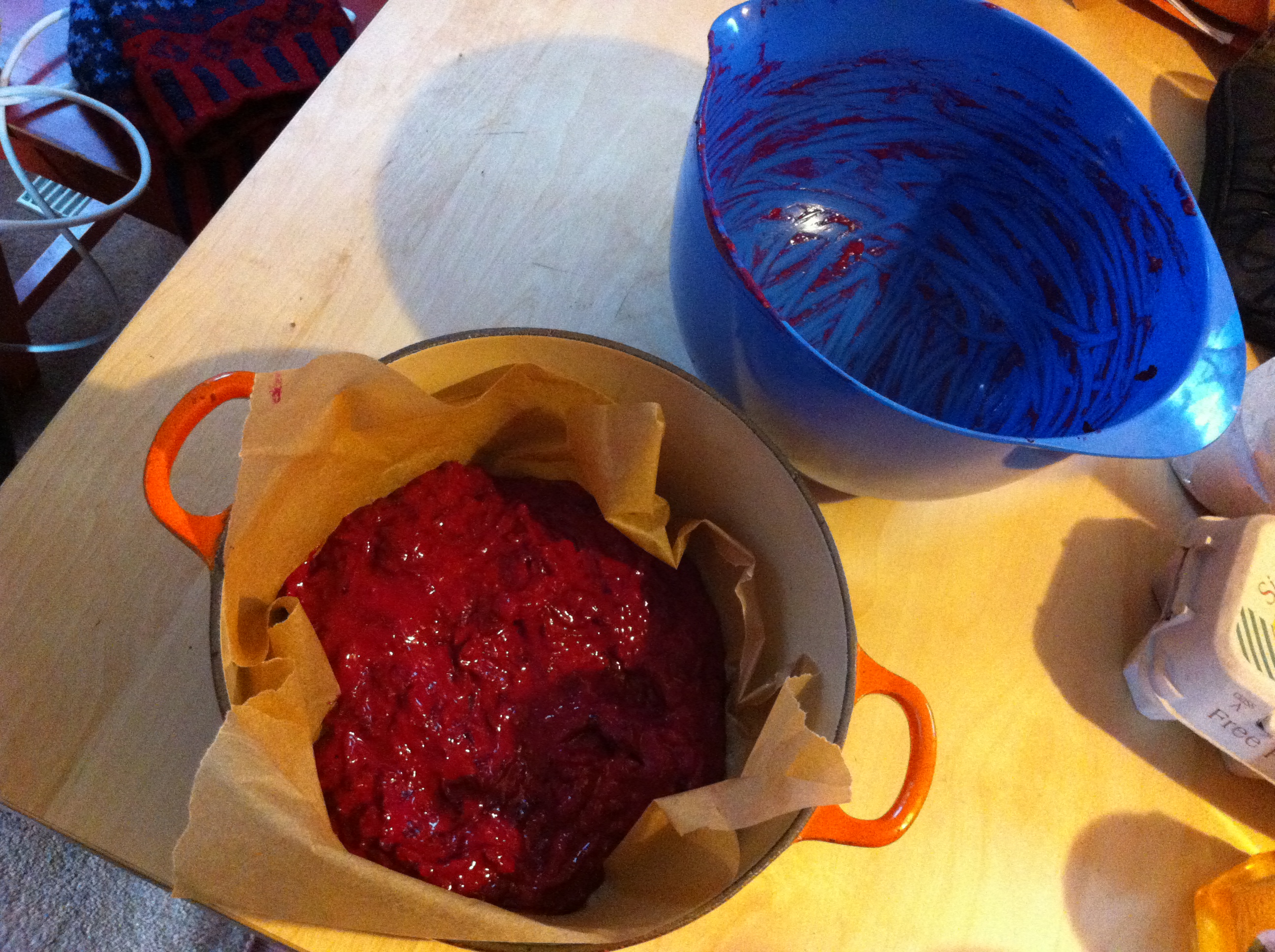
4. Marvel at the beautiful colour
5. Pour into lined pot, add lid and place on top of woodburner at medium-high heat
6. Leave there for at least 20-30 mins or until you smell cooking/slight burning – DO NOT LIFT THE LID BEFORE THEN or all the heat escapes.
7. Your mumpet is ready when the base is not-quite-burned and the top is no longer sticky.
8. Marvel again at your stove-top ingenuity…
Daily bread
I’m hungry already. I realise I will need more (and portable) calories than apple juice and carrots and stew to sustain both walking and talking and thinking this month. I need to make bread.
{[(Grain + mill = flour) + water + yeast + oven] = bread}
From years of riding, running and walking on and around the farm where I live, I have seen wheat, oats, barley, and corn grown locally, albeit on a small scale. From the map I know that there are many water mills in the surrounding parishes that would once have milled these grains. But what is lost is the connection between them: the grain that is grown on this farm, that is dried here (noisily in the perpetual August whine of the grain dryer), that is briefly stored here (in the perpetual hum of the grain store) right next to my home, is also shipped away to be sold and processed.
A month before this project began, I joined the village (Fownhope) Walking for Health group on their November turn around Haughwoods. Walking next to Jean (also from the village’s Carbon Rationing Action Group) and describing my plans for All in a Day’s Walk to her, I was delighted and surprised to discover that, remarkably, there was a farming-baking family – Gail and Duncan Sayce – in the neighbouring village (Woolhope), who grow, mill and make bread from their own wheat, spelt and rye. I phone and Gail kindly agrees to mill me some flour. But she warns me that while they have combined, milled and baked with their own grain in the same day before now, their current grain has been bought in (Doves Farm, Hungerford – how ironic is the name to my grumbling stomach). Hungry, I decide that the cheat is a necessary one.
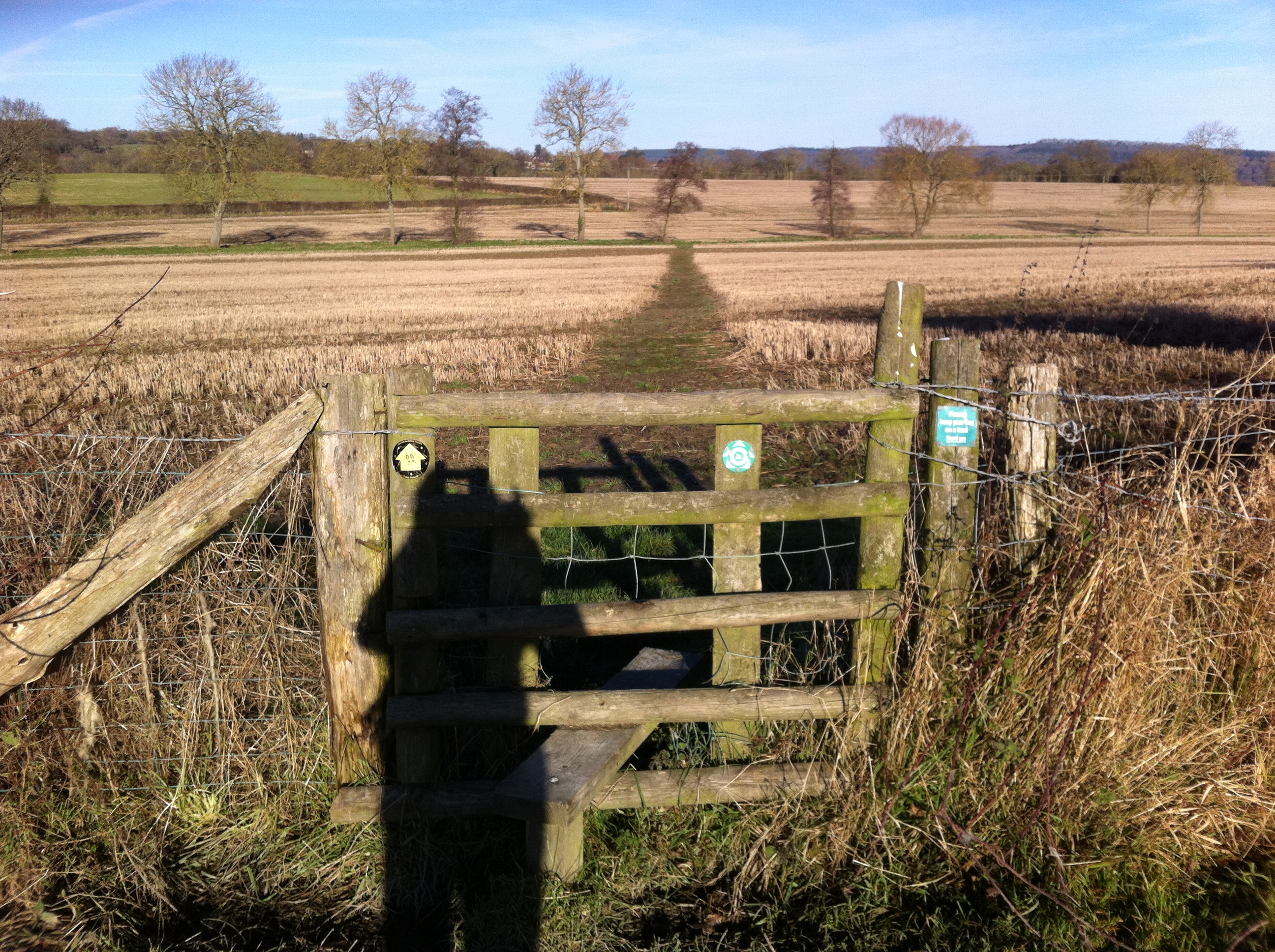
I walk over this morning to Yare Farm via Sollers Hope church, the low sun behind me stretching my shadow in front, like the pull of my hunger reaching ahead of me. The same sun streams into the kitchen as Gail and her son Harvey share their knowledge of baking, milling and grains. Gail has waited until I arrive to mill the grain, which, she tells me starts to oxidise immediately after milling, losing its nutrient value. (The fresh-milling of their flour is something Gail says draws people to their bread, more so than whether the grain is local or not.) And of course, it’s not a watermill, creaking and clunking into action through a system of sluices as I’d romantically imagined, but an electric mill in a modern farmhouse kitchen.


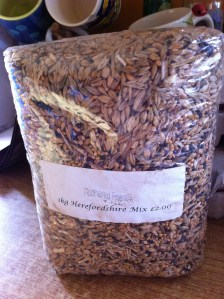
But I can hardly be disappointed – their passion for local, sustainable food and fresh produce is infectious: they rise at 4 am to bake a range of different breads for the local farmers’ markets, run bread-making courses and Harvey is even selling his own Herefordshire bird seed mix entirely from grains sourced from within a five miles radius: all in a day’s flight…
On my way home, I walk the flour on a real journey through an imagined history: altering my route to carry it back via the nearest watermill – Alford’s Mill – I might once have fetched it from. Not surprisingly, many footpaths lead to this place including one in an almost straight line from the farm. I stop and talk to the current owner and learn it was functional from the early 1800s until it was decommissioned in the 1960s. Trudging through waterlogged ground, I record the sounds of transiently restoring lost connection through walking:
These feet weren’t made for walking… Part II
navicular |nəˈvikyələr|
adjective – (chiefly archaic) boat-shaped
noun1 – (also navicular bone) a boat-shaped bone in the ankle or wrist, esp. that in the ankle between the talus and the cuneiform bones.
noun2 – (also navicular disease or navicular syndrome) a chronic disorder of the navicular bone in horses, causing lameness in the front feet.
ORIGIN late Middle English: from French naviculaire or late Latin navicularis, from Latin navicula ‘little ship’, diminutive of navis.
So I ‘cheat’ on my first day… I drive 8 miles into Hereford city to visit Stephanie Owen, a podiatrist at Kyrle House Practice. She has already fitted me with trial orthotics two weeks ago, but I explain my ongoing discomfort, pain, clicking and bruised sensation on the inside of my left foot which is making walking any distance really uncomfortable. She checks out my ankle joints, assesses my range of movement, draws dotted lines with a biro: a contour map on my foot. She assesses the comparative length of my legs (left is longer). Then she watches me walk up and down the corridor. I seem to thump heavily and make a noise like thunder, but she assures me it’s just the floorboards. I turn back on myself repeatedly, walking lengths like a swimmer. Then, magically, she knows what to do and we go back inside the consulting room.
There’s something quite biomechanically alchemical about it: by building up orthotic material in different places under the foot – wedges and slices and slivers (the language is deliberate – I’m already thinking about food: when she pulls a box of these from her bag I say ‘oh, I thought you were bringing out cake!’), the point at which muscles contract and release in the back or the front of the leg can be altered, alleviating discomfort or imbalance. I should know all this: I started to train as an equine podiatrist (natural hoofcare practitioner) many years ago. But translated to my own legs, it’s different and fascinating. Especially when, with my new orthotics the pain around my navicular bone is immediately relieved. Now at least I can start this project: I can walk to feed myself. I know that not everyone is this fortunate.


These feet weren’t made for walking…
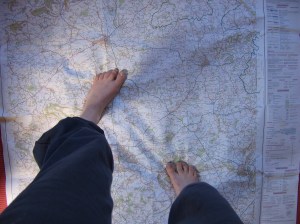
And so it begins…but I appear to be already injured. A niggling pain in my left foot that hasn’t shifted for the past month is worrying me tonight. I will be relying on these feet to carry me in search of daily calories, and fetch wood to cook on. It makes me wonder for what percentage of the world’s population this is normal, daily life: the number of people for whom being able to eat is dependent on being able to walk.
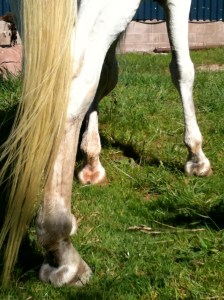
However, there is always the (at present, blissfully-unaware) back-up plan…
All in a Day’s Walk
All in a Day’s Walk is a month-long tracktivist walking performance. From midnight on 6th December 2012 to midnight on 6th January 2013 (Epiphany) I will be living entirely within the distance I am able to walk away from home and back in a day, sustaining myself only on the food that is grown, harvested, processed and obtainable within this distance. I will walk for 6 days a week, measuring out by foot the limits of my month’s existence-subsistence-persistence. I will travel only on foot, accepting no lifts and using no public transport. I will not accept hospitality or food from visitors that does not meet these criteria. I will try to follow all the rules even if I can’t answer all the questions. My walks will facilitate talks: conversational encounters with the people I meet, either randomly on my route or pre-arranged at a specific destination… walkers, farmers, growers, millers, bakers, apiarists, artisan cider-producers, woodsmen, solar installers, yurt-makers, hauliers, butchers, bakers and candlestick-makers. We might talk about the weather. Or we might talk about local food, loss of rural infrastructure, longest nights, lorry-driving, loaves, love and longing (as a vegetarian with a dairy allergy and an auto-immune arthritic with a potato problem, I’m going to be rather h u n g r y). It’s slow food meets slow activism meets slow performance… so please take some time to meander through these pages if you wish, and leave some slow comments…
Jess Allen 06/12/12
Caplor Farm, Fownhope, Herefordshire HR1 4PT


 All in a Day's Walk